

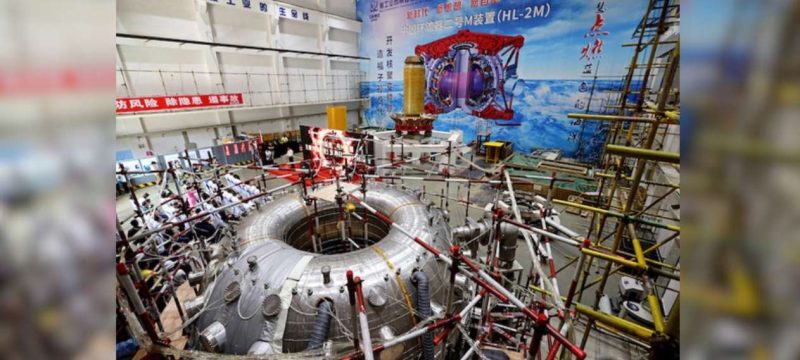
SHANGHAI: Shanghai-based fusion startup Energy Singularity has set a global record for a commercially constructed nuclear fusion device. Its HH70 high-temperature superconducting (HTS) tokamak sustained a steady-state plasma current for 1,337 seconds.
Nuclear fusion, often called the “artificial sun,” replicates the sun’s thermonuclear reactions. Scientists view it as a key solution to the world’s energy shortages and carbon emission problems.
Energy Singularity, China’s first private fusion energy company, was founded in 2021. In June 2024, it commissioned the HH70, the world’s first HTS tokamak. Since then, the device has conducted 5,755 experiments, with recent tests achieving pulse durations exceeding a thousand seconds.
The company credited its artificial intelligence-based plasma control system for this milestone. Continuous AI optimization allowed precise control over plasma stability, ensuring longer pulse times.
Dong Ge, co-founder of Energy Singularity, said, “This breakthrough demonstrates that the integration of HTS and AI control technologies is now feasible. It paves the way for low-cost, high-efficiency fusion power plants.”
He added that the company aims to reduce the levelized cost of electricity from fusion energy to match or undercut thermal power costs.
The HH70 device holds independent intellectual property rights and has a localization rate exceeding 96 percent. It serves as a vital experimental platform for developing Energy Singularity’s next device, the HH170, which aims to achieve net energy gain from fusion.
Shanghai is becoming a global hub for fusion innovation. Alongside HTS tokamaks, the city hosts laser fusion projects and other experimental technologies. The success of HH70 highlights the growing role of artificial intelligence in modern energy research.
In other news read more China’s ‘Artificial Sun’ Breaks Nuclear Fusion Record
Experts say that artificial sun projects like HH70 could revolutionize the global energy market, offering a clean and virtually limitless power source in the coming decades.