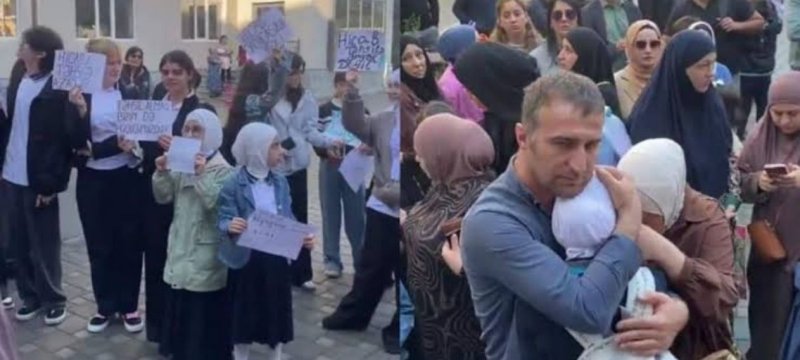
Protests have erupted in Azerbaijan following new school dress code rules restricting the wearing of hijabs by students and teachers. The changes have reportedly led to classroom boycotts and prevented some teachers from entering schools. The controversy has sparked public debate over religious freedom and the country’s secular education system.
The amendment was approved last month and does not explicitly ban the Muslim headscarf. However, it restricts clothing that authorities consider inconsistent with the principle of secularism. The revised rules have drawn criticism from people who believe they limit individual religious choices.
Teacher Zahra Hasanova said she was informed that she could no longer wear her hijab at school. Speaking to an international media outlet, she expressed disappointment over the decision. She said wearing or removing the headscarf should remain a personal choice.
The state-run Azerbaijani Press Agency (APA) reported that the amendment aims to standardise uniforms in state general education institutions. Authorities say the rules are intended to align school clothing requirements with Azerbaijan’s secular principles.
The revised regulations also allow clothing reflecting the country’s history, culture, and national values during celebrations. Such clothing requires approval from the Pedagogical Council, which operates under the Ministry of Science and Education.
Azerbaijan has a predominantly Muslim population, with around 96 percent identifying as Muslim. However, the country’s Constitution defines it as a secular state and guarantees freedom of religion. The new restrictions have raised questions about how these constitutional protections apply within public schools.
Demonstrations and online campaigns have emerged in response to the policy. Videos circulating on social media reportedly show students crying and embracing teachers who were prevented from entering school premises. Local media also reported that students at two or more schools boycotted classes to protest the restrictions.
The controversy has extended beyond schools. Imprisoned journalist Polad Aslanov, who received a 16-year sentence following his 2020 conviction for high treason, reportedly began a hunger strike over the new requirements. His wife, Gulmira Aslanova, shared a message on Facebook in which he said he was protesting what he considered violations of constitutional rights.
Reports of internet disruptions in Azerbaijan have also circulated. However, monitoring organisations, including NetBlocks and the Open Observatory of Network Interference, have not confirmed the reported blackouts through their data.
Opposition to the restrictions has also reached neighbouring Türkiye. Demonstrators gathered outside Azerbaijan’s consulate in Istanbul last week, urging authorities in Baku to reconsider the rules. Some protesters compared the situation with Türkiye’s 1997 military intervention, often called the “post-modern coup,” when women wearing headscarves faced restrictions in universities and public employment.
Azerbaijani President Ilham Aliyev indirectly criticised the protests during a congress of his New Azerbaijan Party. Without directly naming Türkiye, he warned against outside interference in the country’s way of life.
The Turkish government has not officially responded to Aliyev’s remarks. However, President Recep Tayyip Erdogan addressed discrimination against Muslim women during his September 23 speech at the United Nations General Assembly.
In other news read more about Denmark Plans Ban on Azan as Key Minister Compares His Country
The dispute has placed Azerbaijan’s school dress code, religious freedoms, and secular principles at the centre of public debate. Further developments will depend on how authorities respond to the protests and whether the restrictions are reconsidered.