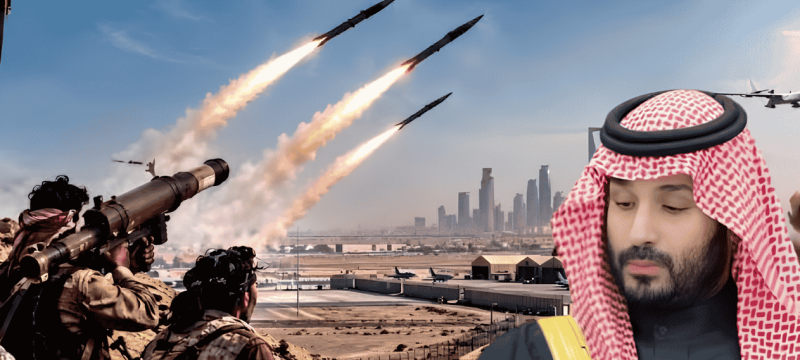
Saudi Arabia is investigating how Houthi drones and missiles breached its air defences and struck Riyadh airport. Initial findings suggest a coordinated assault involving weapons that travelled more than 1,000 kilometres.
The investigation has raised concerns about early-warning systems, Patriot interceptors and the growing cost of defending against repeated aerial attacks. Officials are examining how the weapons approached the Saudi capital and why defensive systems failed to stop them.
According to preliminary findings, Yemen’s Houthi rebels launched several drones before firing cruise and ballistic missiles towards the airport. The initial wave may have complicated the response and allowed later weapons to reach their target.
Coordinated Attack Raises Air Defence Concerns
The reported sequence of the attack has drawn attention to the challenges facing Saudi Arabia’s air defence network. Multiple drones followed by different types of missiles can place significant pressure on defensive systems.
Operators must identify incoming threats and assess their speed, direction and flight patterns. They must then decide which defensive measures to use against each weapon.
Saudi Arabia relies on Patriot interceptors and other advanced systems to protect its airspace. However, detecting and intercepting long-range weapons remains challenging, particularly when several threats arrive in coordinated waves.
Some Houthi ballistic missiles are reportedly equipped with advanced warheads capable of changing direction during flight. Such manoeuvres can make interception more difficult.
However, it remains unclear whether manoeuvring warheads were used in the specific attack on Riyadh airport. Investigators are still examining the circumstances surrounding the reported breach.
Casualties and Repeated Airport Attacks
The assault on Riyadh airport was reported as one of Saudi Arabia’s deadliest attacks in more than a decade. Reuters, citing Saudi authorities, reported at least 12 deaths and 309 injuries.
The incident was also described as the third attack on Riyadh airport within a week. Repeated strikes have increased concerns about the security of civilian aviation infrastructure.
The attacks have highlighted the risks facing airports and other strategic facilities amid the wider regional conflict. Saudi Arabia’s aviation operations have also faced disruption.
Riyadh’s King Khalid International Airport remained closed amid continuing security concerns, according to the provided reports.
The Houthis have also claimed attacks on Dammam airport and two Saudi Aramco facilities. However, these claims have not been independently verified in the available information.
Rising Cost of Patriot Missile Defence
The investigation has also focused attention on the financial burden of intercepting incoming missiles. Advanced air defence systems require expensive interceptors, especially during repeated attacks.
A Patriot Advanced Capability-3 Missile Segment Enhancement (PAC-3 MSE) interceptor was estimated to cost around $3.9 million under the US Army’s fiscal year 2026 budget request.
The fiscal year 2027 request listed a flyaway cost of approximately $4.99 million per missile. The estimated cost rises to about $5.3 million when support expenses are included.
International procurement costs can be higher. Germany’s 2024 procurement case implied an effective price exceeding $8 million per missile.
These figures illustrate the potential cost of sustained air defence operations. However, there is no confirmed information identifying which interceptors Saudi Arabia used during the Riyadh attack or how many missiles were fired.
Regional Conflict Puts Pressure on Missile Supplies
The investigation comes amid concerns about the availability of advanced interceptors across the Middle East. Saudi Arabia and other US allies have faced growing demands for Patriot and Terminal High Altitude Area Defense systems.
One analysis citing estimates attributed to the Center for Strategic and International Studies suggested significant declines in US missile inventories. It estimated that Patriot stocks had fallen by around 65 per cent and THAAD stocks by approximately half.
These estimates underline the pressure that prolonged regional conflicts can place on military supplies. They also highlight the importance of maintaining sufficient defensive capacity.
For Saudi Arabia, the Riyadh airport attack has raised urgent questions about warning systems, interception capabilities and the protection of critical infrastructure. The ongoing investigation is expected to examine how the attack unfolded and what improvements may be needed.
In other news read more about: 13 Injured As Houthi Missiles And Drones Strike Three Saudi Cities