


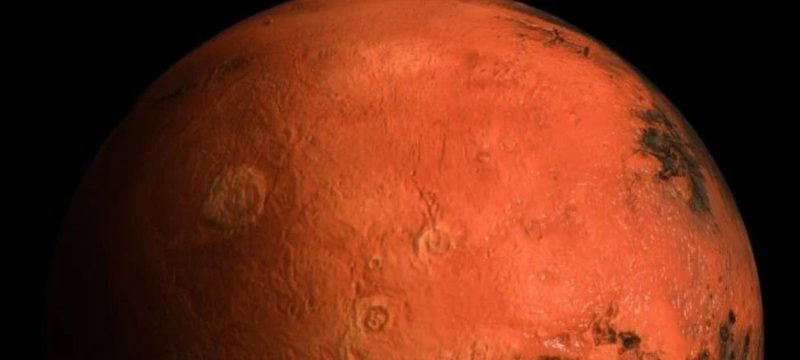
New research reveals that intense, localized dust storms on Mars significantly contributed to the planet’s water loss, reshaping our understanding of its climate history. Scientists say these storms transported water vapor into the upper atmosphere, allowing it to escape into space.
Mars, once a watery world, now appears as a barren desert. Geological evidence, including dry channels and water-altered minerals, shows the planet’s ancient rivers and lakes. Researchers have long debated how Mars lost most of its water over billions of years.
The new study, published in Communications: Earth & Environment, shows that regional dust storms play a key role. These storms lift water vapor high into the middle atmosphere, where it can break apart and release hydrogen into space.
During the Northern Hemisphere summer of Martian year 37 (2022–2023 Earth calendar), a strong localized dust storm caused water concentrations in the atmosphere to rise ten times above normal levels. Shortly after, hydrogen at the exobase—the boundary between the atmosphere and space—spiked 2.5 times higher than usual. This hydrogen escape indicates permanent water loss from the planet.
Shohei Aoki, co-lead of the study from the University of Tokyo, said, “These results add a vital new piece to the incomplete puzzle of how Mars has been losing its water over billions of years.” The findings demonstrate that even short, intense, small-scale storms can accelerate atmospheric escape.
Previously, scientists believed that only large, planet-wide dust storms and warmer seasons in the Southern Hemisphere contributed to water loss. This study highlights the importance of localized, out-of-season storms, showing they had a profound impact on Mars’ transition from a wet planet to a dry desert.
In other news read more about Iran Offers U.S. Investment Role in Oil Sector Amid Ongoing Nuclear Talks
Understanding these processes provides insight into the Red Planet’s climate evolution and may help future missions predict water availability. The study also emphasizes that small weather events can influence long-term planetary conditions, offering lessons for both Mars and Earth’s climate systems.