

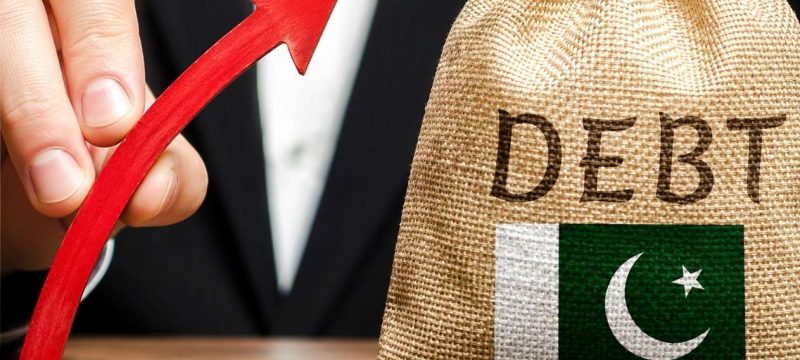
Pakistan’s total Debt increased by 9.30 percent on an annual basis, according to the latest figures released by the State Bank of Pakistan (SBP).
The updated statistics were reported for March 2026 and showed a significant rise in the country’s overall financial liabilities.
According to the State Bank, Pakistan’s total Debt reached Rs68,836 billion during March 2026.
The report showed that a major portion of the amount consisted of domestic borrowing by the federal government.
Officials stated that local debt recorded during March 2026 stood at Rs60,048 billion.
The federal government’s domestic debt alone reached Rs57,566 billion during the same period.
The figures reflected continued reliance on internal borrowing to manage financial requirements and budget-related pressures.
Meanwhile, Pakistan’s foreign debt also remained at a high level despite some fluctuations during the month.
According to the State Bank of Pakistan, the federal government’s foreign debt reached Rs22,959 billion.
The report noted that foreign debt decreased by Rs244 billion during March 2026.
However, another section of the data also showed an increase of Rs789 billion in foreign liabilities during the broader reporting period.
Economic experts believe the rise in national debt reflects ongoing fiscal challenges faced by the country.
Pakistan has been dealing with economic pressure caused by inflation, financing needs, currency fluctuations, and debt servicing obligations.
Analysts say growing debt levels continue to place pressure on government spending and economic planning.
The latest financial data was released at a time when Pakistan is also struggling to meet several economic growth targets for the current fiscal year.
Reports showed that the federal government failed to achieve its targets related to gross domestic product (GDP), agriculture, and industrial growth.
Despite challenges in agriculture and industry, the services sector reportedly performed better and showed relatively stronger growth.
The National Accounts Committee approved the latest economic figures during a recent meeting.
According to estimates, Pakistan is likely to achieve GDP growth of around 3.70 percent during the current fiscal year.
The original target for GDP growth had been set at 4.2 percent.
Economists believe slower growth in key sectors has affected the government’s broader economic objectives.
At the same time, rising debt and financial obligations continue to remain major concerns for policymakers and financial institutions.
Experts say reducing fiscal deficits, improving exports, and increasing investment will be important for controlling debt growth in the future.
Pakistan has recently focused on economic reforms and financial support programs aimed at stabilizing the economy and improving long-term growth.
However, analysts believe consistent policy implementation and stronger revenue generation will be necessary to reduce dependence on borrowing over time.
In other news read more about: Pakistan Collects Over Rs1,200 Billion in Petroleum Levy in Last 9 Months
The latest debt figures once again highlight the financial challenges facing Pakistan’s economy as authorities continue efforts to stabilize economic conditions.