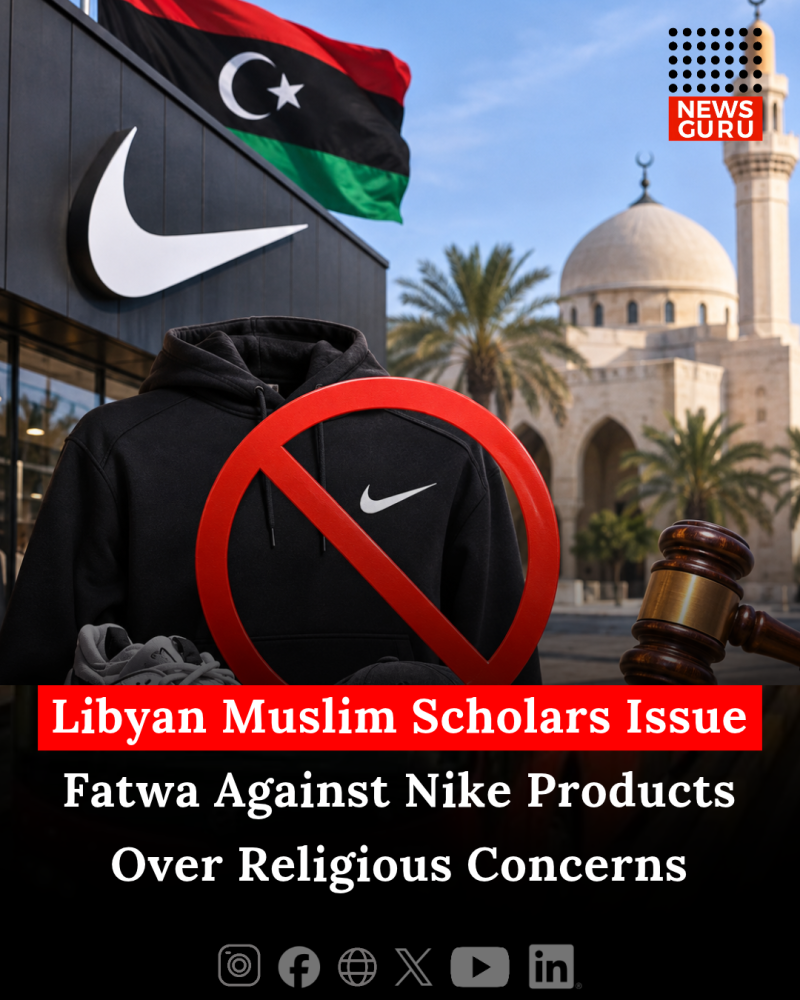
TRIPOLI: Muslim scholars in Libya have issued a religious ruling against buying, selling and wearing Nike Products over concerns about the brand’s name and logo.
The ruling was issued by Libya’s Dar al-Ifta, a religious authority that provides guidance on Islamic matters.
According to the religious body, the American sportswear brand uses symbols connected to ancient Greek mythology. Scholars argued that these symbols conflict with Islamic beliefs about worshipping one God.
The fatwa was approved by Libya’s Grand Mufti, Sadiq al-Gharyani. However, the ruling does not have legal authority and cannot be enforced as national law.
The religious committee explained that Nike takes its name from the ancient Greek goddess of victory.
It also claimed that the company’s famous tick-shaped logo was inspired by the wings of the Greek goddess.
Based on this interpretation, the scholars argued that displaying the brand’s name and logo raises religious concerns.
The committee described the symbols as being associated with polytheism, which involves belief in or worship of multiple gods.
However, the ruling reflects the religious authority’s interpretation rather than an established legal restriction on the brand.
The American sportswear company was founded in 1964 and later adopted the name Nike.
Its branding has historical connections to Greek mythology, although the company is internationally recognized for athletic clothing and footwear.
The fatwa has also attracted attention because of Libya’s historical connections with ancient Greek civilization.
Cyrene, an ancient Greek city in northeastern Libya, contains archaeological remains featuring images associated with Greek mythology.
The historic site is recognized as a UNESCO World Heritage Site and represents an important part of Libya’s cultural heritage.
Despite the religious ruling, Nike Products remain available through independent sportswear retailers operating in Libya.
The company does not operate official stores in the country, but local businesses sell clothing and footwear carrying its branding.
Nike is also widely recognized across North Africa, where branded sportswear remains popular among consumers.
However, counterfeit clothing and footwear carrying international brand logos are also commonly sold in regional markets.
Alongside its religious objections, Dar al-Ifta raised concerns about the company’s alleged political associations.
The religious authority accused Nike of supporting Israel and encouraged Muslims to boycott businesses it considers supportive of Israel.
These allegations were presented as part of the authority’s position and were not independently established in the announcement.
The ruling also referred to an earlier statement issued in 2023 by the Council for Research and Sharia Studies.
That statement encouraged Muslims to avoid Western companies the council considered supportive of Israel during the Gaza conflict.
The latest fatwa combines religious objections to Nike’s branding with broader calls for consumer boycotts.
Although the religious authority holds influence in Libya, its rulings do not automatically become government regulations.
Therefore, the announcement does not establish a nationwide legal ban on the sale or use of Nike Products.
In other news read more about NADRA Opens Jobs for Women in 8 Punjab Districts — Check If Yours Is Included
The development highlights how religious interpretations and political concerns can influence consumer choices in different societies.