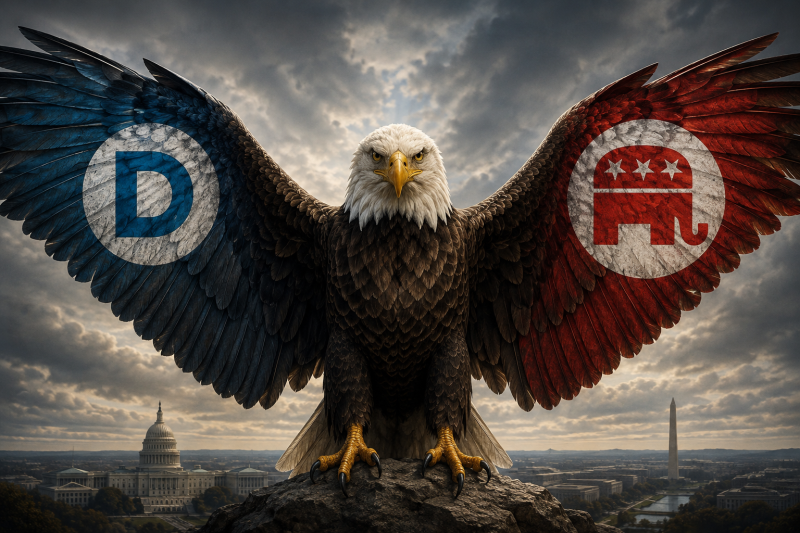
Every American election seems to come with the same sales pitch: vote Democrat to save democracy, protect human rights and restore some basic decency to the White House.
The Republicans are the villains. The Democrats are the sensible alternative. Simple enough.
But there’s a problem with this narrative: the Democrats have a history of their own, and it isn’t nearly as clean as their branding suggests.
Look beyond the campaign speeches and you’ll find a party that has repeatedly supported military interventions, expanded American military power and helped maintain Washington’s global dominance.
So, how different are the two parties really?
Barack Obama: Peace Rhetoric, Drone Warfare
Obama arrived in the White House in 2009 promising diplomacy and a fresh start for American foreign policy. He even received the Nobel Peace Prize that year.
Yet his administration oversaw a massive expansion of America’s drone warfare programme.
According to the Council on Foreign Relations’ final assessment, Obama authorised 540 drone strikes during his presidency, resulting in an estimated 3,797 deaths, including 324 civilians.
The Peace Prize and the drone strikes belong to the same presidency. That’s worth remembering.
Libya: Another Humanitarian Intervention
In 2011, Obama’s administration joined the NATO intervention in Libya, initially justified as an effort to protect civilians from Muammar Gaddafi.
The intervention was authorised under UN Security Council Resolution 1973, with American forces participating in the initial military operation.
Gaddafi was eventually overthrown. What followed was years of political instability, competing armed factions and institutional fragmentation.
A 2016 British parliamentary inquiry was particularly critical of the intervention and the failure to plan adequately for what came afterwards.
The lesson? Invoking humanitarian concerns doesn’t automatically make military intervention a success.
Bill Clinton and Bosnia: What Did Peace Actually Deliver?
The Clinton administration played a central role in negotiating the 1995 Dayton Peace Agreement, bringing an end to the Bosnian War.
Ending the war was an enormous achievement. But the agreement also formalised Bosnia’s ethnic divisions, establishing two political entities, including Republika Srpska, which covers approximately 49% of the country’s territory.
The US Government Accountability Office’s report on the Dayton settlement documents the territorial division and the political arrangements established by the agreement.
For a country devastated by genocide, ethnic cleansing and displacement, this was hardly an uncomplicated peace.
The guns fell silent, but a political system shaped by wartime territorial gains became part of the country’s future.
Peace, yes. Justice? A much more complicated question.
Democrats vs Republicans: Different Packaging, Familiar Foreign Policy?
To be clear, Democrats and Republicans are not interchangeable. Their domestic policies, social priorities and approaches to economic issues differ, and those differences matter.
But when it comes to American military power and global influence, the overlap is difficult to ignore.
Democratic administrations have authorised military interventions, expanded drone warfare and pursued policies with devastating consequences abroad. The language is often more diplomatic, the messaging more humanitarian, but the commitment to preserving American geopolitical influence remains.
Republicans don’t have a monopoly on imperialism. Neither do Democrats have a monopoly on compassion.
Is Being the Lesser Evil Enough?
Perhaps the biggest problem with American politics is how easily voters are pushed into treating the Democratic Party as a moral victory simply because the alternative looks worse.
But being less objectionable than your opponent doesn’t automatically make you good.
A party can champion human rights at home while supporting military policies that undermine the security and sovereignty of people elsewhere. It can speak about democracy while participating in interventions whose consequences other nations are left to live with.
The Democrats may offer a different domestic vision. But their foreign-policy record deserves the same scrutiny as that of their Republican rivals.
Two wings, same bird. Different campaign slogans, familiar ambitions. And perhaps it’s time to stop confusing the lesser evil with the good guys.