Business & Technology | Fintech | Digital Innovation
Built by Islamabad fintech Otus Apps, Kommittee brings the traditional committee into a mobile wallet: the same way of saving together, without the chasing, the notebook or the guesswork.
For generations, the committee has been one of the most common ways Pakistani households save. Friends, colleagues, relatives and neighbours each put in a fixed amount every month, and each month one member takes home the whole pot. Committees have paid for school fees, weddings, motorbikes and the first stock for small shops.
The system runs on trust, and usually on paper. One organiser collects the money, records payments in a notebook or a WhatsApp group, and answers the question every member eventually asks: when is my turn?
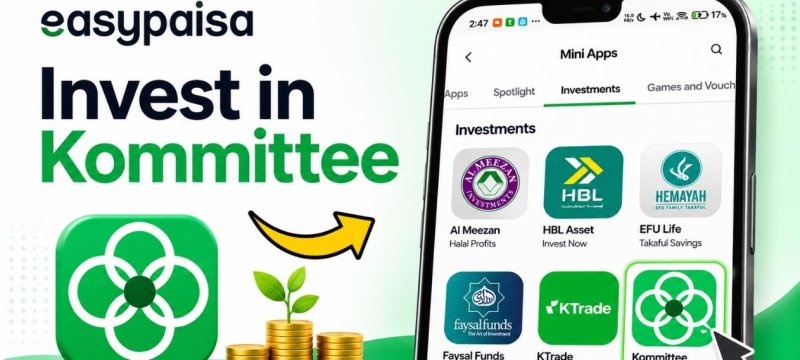
Kommittee, a product of Bachat, the financial platform built by Islamabad-based Otus Apps, moves that process into a mobile wallet. It went live on 12 July 2026 as a mini-app inside easypaisa.
What it changes
A traditional committee depends on one organiser. That person collects every payment by hand, follows up with whoever is late, keeps the records and decides the order of turns. If the organiser falls behind or a member stops paying, the whole group feels it, and disputes are hard to settle without a clear record.
Kommittee takes that work off people’s hands. Contributions are collected automatically on a fixed date, so nobody has to chase anyone. Each member knows their payout month from the day they join. Every payment is recorded and visible in the app, which replaces the notebook and removes the guesswork about who has paid.
The idea stays the same: members save together and each receives the pool in turn, with no interest paid or charged. What changes is that the committee no longer rests on one person’s time and memory, and members can join a group beyond their immediate circle with the same clarity they would expect from any other financial service.
Why it was built
The team behind Kommittee did not set out to invent a new way of saving. Committees already work, and millions of people trust them. The aim was to keep that habit and remove the friction around it.
“People already know how to save together. Committees have worked in Pakistan for generations,” said Muhammad Omer Ikram, founder and CEO of Otus Apps. “What people wanted was an easier way to run them, without the chasing, the notebooks and the questions about whose turn is next.”
Why the partnership matters
Building inside easypaisa means Kommittee reaches people who already keep money in a mobile wallet, without asking them to download a new app or open a new account. For fintech startups, it shows a route to market through established platforms rather than standalone apps.
It also means the committee runs on the same platform members already use to pay bills and send money, so saving together becomes part of their everyday financial routine rather than a separate arrangement to manage.
What comes next for digital savings
The test for a product like Kommittee is whether it can keep what people value in a committee, its familiarity, discipline and trust between members, while adding the record-keeping and reliability of a regulated payment platform.
A digital committee does not remove the need for trust. It changes where that trust is placed: in a fixed schedule, a clear record and a system that runs on time.