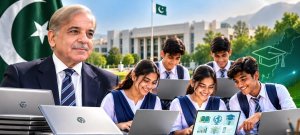
Education is one of the strongest foundations of a successful society. It creates opportunities, strengthens families, improves communities and contributes to national development. For Pakistan, investing in education is not simply a social responsibility; it is an investment in the country’s future. Among the many priorities of the education sector, girls’ education deserves particular attention.
A country cannot achieve its full potential if a significant portion of its population is unable to access quality education. Girls represent an important part of Pakistan’s human potential. Their education can contribute to economic growth, social progress, better healthcare awareness and stronger communities.
Over the years, Pakistani women have demonstrated their abilities in various fields, including medicine, education, science, business, public administration and technology. Their achievements show that when girls receive opportunities, they can make valuable contributions to society. However, many girls, particularly in rural and economically disadvantaged areas, continue to face barriers to education.
Poverty remains one of the major challenges. Some families struggle to afford school expenses, transportation and educational materials. In certain areas, the distance between homes and schools also creates difficulties. Limited educational facilities, shortages of female teachers and inadequate infrastructure can further discourage families from sending their daughters to school.
Addressing these challenges requires collective efforts from the government, educational institutions, communities and parents. The government must continue investing in schools, improving educational facilities, recruiting qualified teachers and ensuring that schools are accessible to girls in remote areas. Scholarships, financial assistance and safe transportation can also encourage families to continue their daughters’ education.
Parents have an equally important role. Education should not be viewed as an opportunity reserved only for boys. Both sons and daughters deserve equal opportunities to learn, develop their abilities and pursue their ambitions. An educated daughter can become an independent professional, an informed citizen and a positive influence within her family and community.
Educational institutions must also focus on providing quality education rather than simply increasing enrolment numbers. Modern teaching methods, science laboratories, computer facilities and vocational training can help prepare girls for the demands of a changing world.
Furthermore, educating girls does not mean weakening family values or traditions. Education can strengthen families by promoting knowledge, responsibility, confidence and informed decision-making. A society that values education can preserve its cultural identity while embracing positive change.
Pakistan has a young population and considerable human potential. If the country wants a stronger economy, healthier communities and a more progressive society, girls must be included in its development journey.
The future of Pakistan cannot be built by educating only half of its population. Every girl who enters a classroom represents another opportunity for national progress. Educating a girl is not merely changing one life; it is investing in the future of an entire nation.