Pakistan has a problem with the objectification of its women. Objectification isn’t only about viewing women as sexual objects or objects of attraction, or about commercials, magazines, and films portraying women in overly sexualized ways to sell products or grab attention.
Benevolent Objectification: Women on a Pedestal
Pakistani society likes to view its women a certain way. Traditional culture deeply emphasizes women’s roles as nurturers, mothers, and keepers of family honor. This is often called role reduction, or benevolent objectification.
In traditional households, a woman is seen as the primary caretaker, responsible for the emotional and physical well-being of the family. From a young age, girls are socialized to prioritize others, manage domestic duties, and maintain harmony within the home. As a result, a woman’s value is frequently tied to how well she serves, cares for, and supports her children, husband, and extended family.
Motherhood and Total Self-Sacrifice
Motherhood is deeply revered in Pakistan, heavily influenced by Islamic teachings (such as the well-known saying that “Paradise lies under the feet of your mother”) and cultural tradition. As a mother, a woman gains a level of respect, authority, and moral standing within the family that she may not have had as a young bride or daughter.
However, this reverence comes with an expectation of total self-sacrifice. A “good mother” is culturally expected to suppress her own desires, career ambitions, and personal identity for the sake of her children.
Family Honor
Perhaps the most complex part of this expectation is the concept of family honor. In traditional Pakistani society, a family’s respect, status, and standing in the community are heavily tied to the behavior, modesty, and chastity of its female members.
The “Career Woman” vs. “Stay-at-Home Mom” Trap
The frequent division between the “career woman” and the “stay-at-home mom” is itself a form of objectification. The career woman is described as someone who neglects the raising of her children, while the stay-at-home mother is described as just a person who cooks, cleans, and raises the children.
Dramas: The Bechari and the Bad Modern Woman
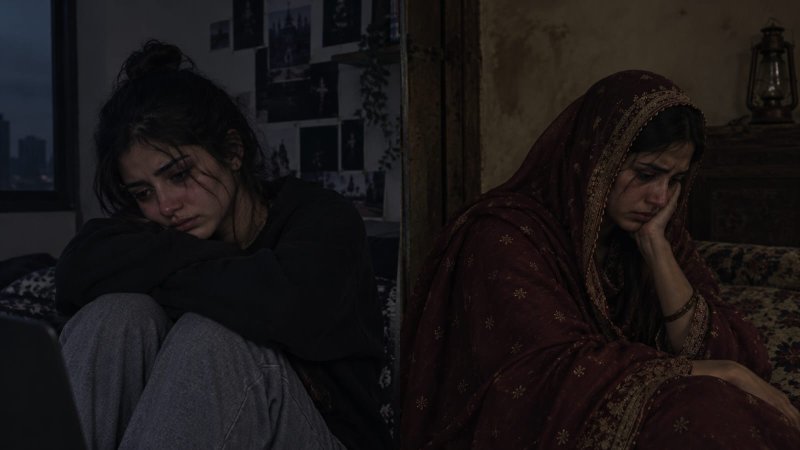
Television dramas and advertisements reduce women to stereotypes. Countless productions restrict women to domestic, submissive roles, portraying their ultimate success only through self-sacrifice and obedience to the family. Two archetypes dominate:
- The Bechari woman: submissive, self-sacrificing, and rewarded only for obedience
- The Bad Modern Woman: usually shown in western clothes like jeans or sleeveless shirts, with short or styled hair and heavy makeup, constantly on a smartphone or driving a car, and portrayed as ambitious, materialistic, fiercely independent, and ultimately untrustworthy, manipulative, or unfaithful
Whether she is the submissive angel or the westernized villain, neither character exists for her own sake. Both are reduced to how they affect the honor, utility, and comfort of the men and family around them.
This is the ultimate form of narrative objectification. A well-written, humanized character has internal goals, makes choices for her own life, and experiences personal growth. In these dramas, a woman’s arc is measured entirely by an external ruler: the family dynamic.
How Objectification Feeds Rape Culture
According to social psychologists and gender researchers, benevolent objectification and role reduction feed directly into a rape culture that increases public unsafety and acts of sexual violence. When a culture treats a woman’s safety as conditional on her playing a submissive, nurturing role, it builds a psychological framework that tolerates violence when she steps out of that role.
What the Research Shows
A study by researchers at Bahauddin Zakariya University in Multan surveyed 240 university students on ambivalent sexism and rape myth acceptance. Its findings:
- Both hostile sexism and benevolent sexism (putting women on a pedestal as long as they stay submissive) were positively correlated with rape myths
- Sexist beliefs predicted acceptance of myths like “she asked for it by being out late”
- Male participants showed higher acceptance of rape myths and higher levels of ambivalent sexism
Related research on Pakistani university students points the same way, finding that rape myths are widespread among young Pakistanis.
When the Pedestal Breaks
Researchers on ambivalent sexism argue that men who hold “soft” objectifying views can turn hostile the moment a woman rejects her traditional role. Because her value is tied to being “useful” or a symbol of family honor, any deviance transforms her, in the observer’s mind, from a “sacred nurturer” into a “worthless object.” That shift lowers the psychological barrier to committing or excusing harassment.
Sources: Bahauddin Zakariya Universityhttps://www.academia.edu/9264041/Stop_Blaming_the_Victim_A_Meta_Analysis_on_Rape_Myths|