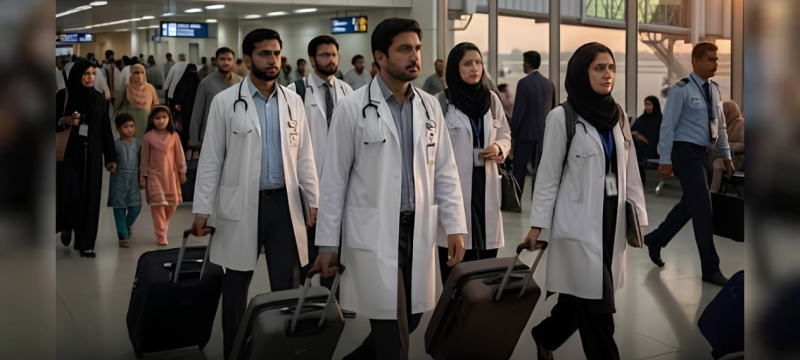
PESHAWAR: Khyber Pakhtunkhwa (KP) is facing a serious Doctor Shortage, with only 8,024 doctors serving a population exceeding 40 million.
The latest figures show that approximately one doctor is available for every 5,000 to 6,000 residents across the province.
The healthcare system is also struggling with insufficient hospital beds and hundreds of non-functional medical facilities.
According to the reported figures, more than 200 government healthcare facilities remain non-functional across different districts.
These shortages highlight the growing gap between available medical services and the healthcare needs of KP’s population.
KP Faces Shortage of Over 32,000 Doctors
The Doctor Shortage in Khyber Pakhtunkhwa becomes more evident when compared with international healthcare benchmarks.
The World Health Organization (WHO) benchmark cited in the report is one doctor for every 1,000 people.
Based on this benchmark, KP would require approximately 40,000 doctors to serve its population.
However, the province currently has only 8,024 doctors, leaving an estimated shortage of nearly 32,000 medical professionals.
This means the existing workforce represents only about one-fifth of the estimated requirement.
The shortage raises concerns about access to medical consultations, emergency treatment, and specialist healthcare services.
KP Hospitals Face Shortage of Over 45,000 Beds
Apart from the shortage of doctors, public hospitals in KP are facing a significant shortage of beds.
According to the available figures, government hospitals currently have 18,432 beds.
However, the province requires approximately 64,000 beds to meet its population’s healthcare needs.
This leaves a shortage of more than 45,000 hospital beds across the province.
The existing capacity represents less than one-third of the estimated requirement.
Limited hospital capacity can create challenges for patients requiring admission, surgery, or emergency medical treatment.
Meanwhile, more than 200 government health facilities remain non-functional, further limiting available healthcare services.
KP Government Plans Hospital Audits and Healthcare Reforms
KP Health Adviser Lt. Gen. (R) Nigar Johar discussed the province’s healthcare challenges during a recent briefing.
She said the provincial government had decided to introduce amendments to the Medical Teaching Institutions (MTI) Act.
The government also plans to conduct audits of hospitals to review their operations and performance.
These measures are intended to address existing problems within the provincial healthcare system.
The proposed reforms come as authorities face increasing pressure to improve medical facilities and healthcare management.
Sehat Card Programme to Continue With Improvements
Nigar Johar also confirmed that the provincial government has no plans to discontinue the Sehat Card programme.
Instead, authorities intend to identify existing problems and introduce improvements to the scheme.
The government has already decided to conduct a financial audit of the Sehat Card programme.
The audit will examine financial management and help identify areas requiring corrective measures.
The programme remains an important part of the province’s healthcare support system.
Government Orders Faster Work on New Hospitals
Earlier, the KP government directed authorities to accelerate construction and development work on new hospitals.
The decision was aimed at expanding healthcare infrastructure and improving access to medical treatment.
However, the latest statistics indicate that substantial gaps remain in the province’s healthcare capacity.
The ongoing Doctor Shortage, limited hospital beds, and non-functional facilities continue to present major challenges.
Addressing these issues will require improvements in medical staffing, hospital infrastructure, and healthcare administration.
In other news read more about UHS Announces MBBS Admissions Schedule For Punjab Private Colleges 2026–27
The provincial government’s planned reforms and hospital audits are expected to focus on these areas.