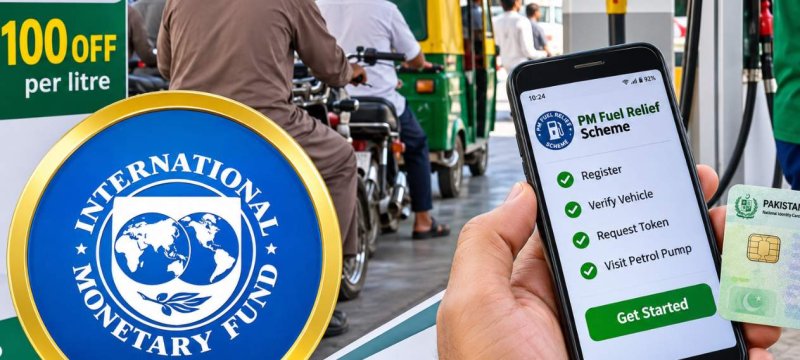
ISLAMABAD: The International Monetary Fund (IMF) has urged Pakistan to gradually end its Rs. 75 billion fuel relief programme, raising concerns about its high cost and broad coverage.
The international lender believes the existing subsidy scheme should be phased out to reduce pressure on the country’s public finances.
An IMF spokesperson told Arab News that future fuel assistance should be limited, temporary and directed towards vulnerable households.
The Fund also stressed that any new relief measures must remain within the government’s fiscal limits for the financial year 2026-27.
The latest position follows discussions between Pakistani authorities and the IMF under the country’s ongoing economic reform programme.
According to the Fund, future assistance should reach deserving households through established social protection programmes rather than broad fuel subsidies.
The IMF’s recommendation has raised questions about the future of the Prime Minister’s Fuel Relief Scheme, which was introduced in September 2026.
The Economic Coordination Committee approved Rs. 75 billion for the programme to provide targeted assistance to lower-income motorists.
Under the scheme, motorcycle and rickshaw users receive fuel relief worth Rs. 500 per week.
Owners of eligible cars with engine capacities of up to 800cc also receive a discount of Rs. 100 per litre, subject to the programme’s monthly limits.
The government introduced the initiative following a sharp increase in international petroleum prices.
According to the official announcement, the programme aims to reduce transportation costs for lower-income citizens.
The initiative has attracted millions of registrations since its launch. At a review meeting on November 5, the government reported that more than 15.5 million people had registered.
The figures included approximately 15.06 million motorcycle owners and 449,000 owners of vehicles with engines up to 800cc.
The government also reported that Rs. 28.6 billion had been paid under the scheme by November 4.
However, the IMF considers the programme’s coverage too broad and wants Pakistan to withdraw the existing support.
In its October 7 staff-level agreement with Pakistan, the Fund had already recommended the prompt phase-out of the fuel support scheme.
The IMF also warned that continued uncertainty in international energy markets could create further economic pressure.
Pakistan relies heavily on imported petroleum and gas. Higher global energy prices can increase import costs and contribute to domestic inflation.
The Fund has therefore encouraged the government to protect vulnerable households through existing social assistance systems.
Pakistan is currently implementing a $7 billion Extended Fund Facility programme with the IMF.
On October 7, both sides reached a staff-level agreement on the fourth review of the programme and the third review under the Resilience and Sustainability Facility.
The agreement is subject to approval by the IMF Executive Board. Following approval, Pakistan is expected to receive approximately $1 billion under the EFF and another $210 million under the RSF.
Despite the IMF’s recommendation, the Pakistani government has not announced an immediate cancellation of the existing fuel relief programme.
Any decision regarding its continuation or withdrawal will depend on government policy and the country’s budgetary commitments.
In other news read more about: NDURE Faces Rs. 40,020 Fine Over a Shopping Bag Charge!
For now, the IMF wants Pakistan to phase out the broad subsidy and ensure that any future fuel assistance is temporary, affordable and focused on those most in need.