


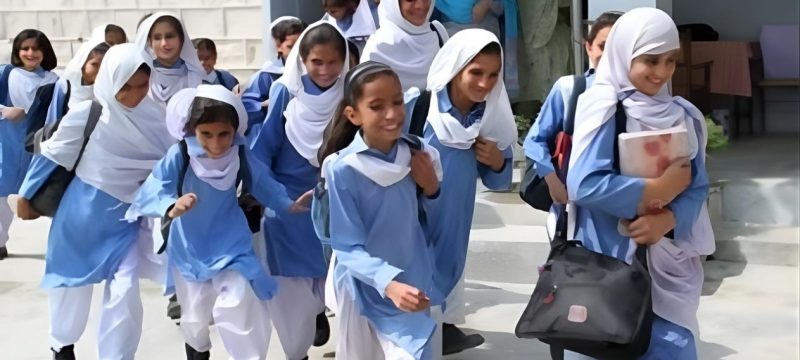
ISLAMABAD: More than 25 million children in Pakistan are still out of school despite the government’s national Education emergency declared more than two years ago. A new policy review says the country continues to face serious challenges due to low funding, weak governance, and poor implementation of reforms.
The report was prepared by the Civil Services Academy (CSA). It examined progress under the National Education Action Plan (NEAP) 2026 and compared policies across the provinces.
According to the report, Pakistan has between 25.1 million and 26 million out-of-school children. This remains one of the highest numbers in the world. The report notes that this situation continues despite Article 25-A of the Constitution, which guarantees free and compulsory Education for all children.
The study says the country’s education system has struggled for decades. It points to rapid population growth, poverty, weak institutions, and limited public spending as the main reasons behind the ongoing crisis.
The report also highlights that public schools have not expanded fast enough to meet growing demand. As a result, many families have turned to low-cost private schools for their children’s education.
Punjab has the highest number of out-of-school children among all provinces. The report estimates that between 9.6 million and 10.4 million children in Punjab are not attending school.
According to the Punjab School Education Department’s 2026 baseline report, around 6.4 million children have never enrolled in school. Another 3.16 million students left school before completing their studies. The findings show that keeping children in school is just as important as enrolling them.
The report also outlines different challenges faced by each province.
Sindh continues to experience high dropout rates after primary school. The province also faces repeated disruptions caused by climate-related events.
Khyber Pakhtunkhwa struggles with security concerns, difficult geography, and a shortage of female teachers. These factors make it harder to improve access to Education, especially in remote areas.
Balochistan faces its own set of problems. The report points to weak institutions, inactive schools, and scattered populations as major barriers to educational progress.
The study notes that Islamabad, Gilgit-Baltistan, and Azad Jammu and Kashmir have better enrollment rates than other regions. However, it adds that inequalities still exist within these areas.
The Civil Services Academy concluded that declaring a national education emergency has increased political attention on the issue. However, the report says long-term success depends on stronger implementation, improved governance, and greater investment in the education sector.
In other news read more about Punjab Introduces New Education Plan to Improve School Management and Standards
The report also stresses that each province faces different challenges. It recommends tailored policies instead of a single nationwide approach. According to the study, better planning and sustained investment are essential to improve Education outcomes and reduce the number of out-of-school children across Pakistan.