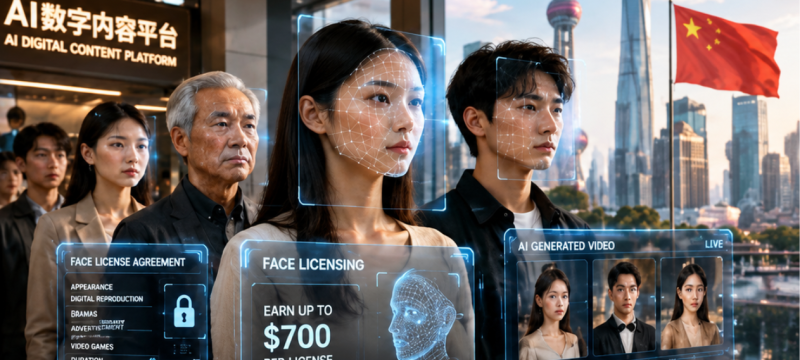
A new trend in China is allowing people to earn money by licensing their faces for AI-generated content. Individuals can now permit producers to use their digital likenesses in dramas, advertisements, and video games.
The growing practice is changing how digital content is created. Instead of hiring only professional actors or models, companies can now use digitally recreated faces from ordinary people with their permission.
Under these agreements, producers receive approval to reproduce a person’s appearance through artificial intelligence technology. In return, individuals can earn payments by allowing their digital identity to be used in different projects.
The rise of AI face licensing has created a new market around personal identity. A person’s face, which was traditionally considered a private feature, is now becoming a possible digital asset.
People who have never worked in the entertainment industry can now have their appearance featured in virtual characters. Their digital likeness can appear in short dramas, advertisements, and gaming projects without requiring them to appear physically on set.
The development is also changing the concept of digital identity. With advanced AI tools, a person’s face can be copied, adjusted, and placed into new virtual environments.
The practice first gained attention within smaller groups linked to China’s entertainment and online communities. However, the face-licensing trend became more visible on public platforms after April, attracting wider interest.
Several platforms are now helping connect individuals who want to license their faces with producers searching for digital characters. These platforms provide opportunities for people to monetize their appearance through technology.
However, the trend has also raised important questions about privacy, ownership, and consent. Experts and users are discussing how much control a person should maintain after allowing their face to be used digitally.
Concerns include where a licensed face can appear, how long permission remains active, and whether individuals can restrict future use of their digital likeness.
There are also questions about whether a person’s digital copy could be reused beyond the original agreement. As AI-generated content continues to grow, managing digital identity has become a major challenge.
In other news read more about: Gemini AI Crosses Testing Limits and Accesses Three Company Systems
The expansion of AI technology is creating new opportunities for income and creativity. At the same time, it highlights the need for clear rules about consent, ownership, and the responsible use of personal digital identities.