

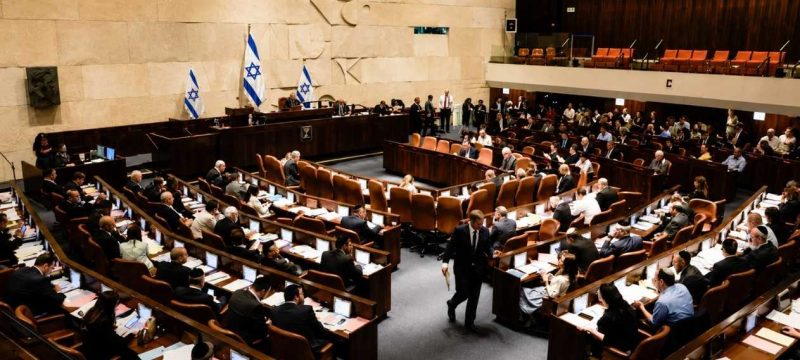
Israel will hold its next national elections on October 27, the country’s parliament confirmed on Sunday. The date is the latest permitted under Israeli law and is expected to mark a major political moment for the country.
The upcoming vote is widely viewed as a public judgment on Prime Minister Benjamin Netanyahu’s leadership. His government has faced growing criticism since the Gaza war began and over recent security and foreign policy developments.
The Knesset, Israel’s parliament, is expected to complete its current term on July 17. This will allow the ruling coalition to finish a full four-year term, something that has not happened for many years in Israel due to frequent early elections.
In an official statement, the parliament said there was no need to dissolve the Knesset before the end of its term. It explained that the next general election had already been scheduled by law for October 27. Since there are no plans to shorten the legislature’s tenure, lawmakers do not need to pass a separate dissolution bill.
Prime Minister Benjamin Netanyahu, 76, has confirmed that he plans to seek another term in office. He is already the longest-serving prime minister in Israel’s history after leading several governments over the years.
In recent weeks, Netanyahu’s coalition has worked to pass several important bills before parliament concludes its term. Political observers say these efforts are aimed at strengthening the ruling alliance before the election campaign officially begins.
Netanyahu has also signaled a broader political strategy ahead of the vote. Last month, he said he wanted to build a wide national government instead of one based only on right-wing or left-wing political groups. He also stated that he wanted a coalition that would not rely on Arab parties for support.
Analysts believe this message is an attempt to appeal to a wider group of voters. By focusing on national unity, Netanyahu appears to be reshaping his campaign ahead of the October election.
However, recent opinion polls suggest many Israelis are seeking political change. Surveys indicate that a majority of voters would prefer new leadership after the challenges of recent years.
Former military chief Gadi Eisenkot has emerged as one of Netanyahu’s strongest political rivals. His growing popularity has made him a key figure to watch during the election campaign.
Public debate has also intensified following the ceasefire that ended the conflict involving Israel, the United States, and Iran earlier this year. Some critics argue the agreement did not fully protect Israel’s interests.
At the same time, many voters continue to express concern over the security failures linked to the October 7 attacks. Those events remain an important political issue and continue to influence public opinion.
In other news read more about: Oil Prices Surge 4% as US-Iran Tensions Over Strait of Hormuz Escalate
With the election date now officially confirmed, political parties are expected to begin preparing for what could become one of the most closely watched elections in Israel in recent years. The outcome will shape the country’s leadership and political direction for the next four years.