


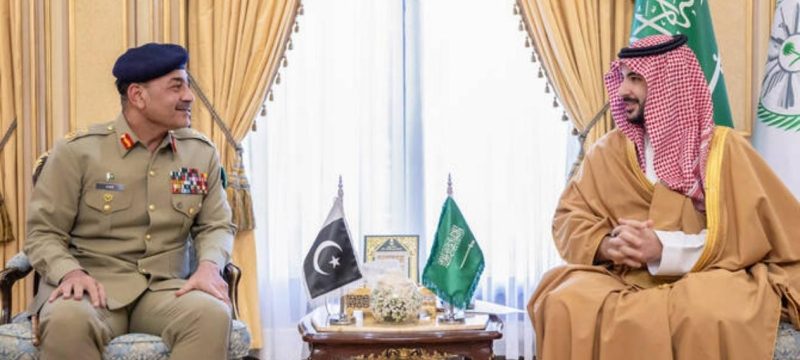
RIYADH – Chief of Defence Staff and Army Chief, Field Marshal Asim Munir, met with the Saudi Defence Minister, Khalid bin Salman Al Saud, in Saudi Arabia on Saturday. The discussions focused on the ongoing conflict in the Middle East and recent Iranian attacks targeting the Kingdom.
After the meeting, the Saudi Defence Minister posted on X that both sides discussed “Iranian attacks on the Kingdom and the measures needed to halt them.” He emphasized that such actions threaten regional security and stability, urging Iran to exercise caution and avoid miscalculations.
Pakistan and Saudi Arabia maintain a strong relationship based on military cooperation, economic ties, and shared Islamic heritage. Historically, Riyadh has provided financial aid and oil supplies to Pakistan, reinforcing bilateral relations.
Deputy Prime Minister and Foreign Minister Ishaq Dar recently credited Pakistan’s diplomatic efforts with helping prevent more severe Iranian strikes on Saudi Arabia. He explained that the attacks were aimed at United States military bases and allied facilities in the Gulf region.
In addition, Pakistan requested Saudi Arabia to offer an alternative oil supply route via Yanbu. This request follows the closure of the Strait of Hormuz after US and Israeli strikes on Iran, aiming to secure Pakistan’s fuel supply chain.
The meeting also reinforced commitments under the “Strategic Mutual Defence Agreement,” signed last September in Riyadh between Prime Minister Shehbaz Sharif and Saudi Crown Prince Mohammed bin Salman. According to the pact, any attack on either country is considered an act of aggression against both nations.
The interaction highlights the growing military and strategic cooperation between Pakistan and Saudi Arabia. The Saudi Defence Minister and Pakistani officials reiterated the importance of regional stability and proactive measures to prevent conflict escalation.
In other news read more about Has Saudi Arabia Paused Its Investments in Pakistan Amid Middle East Tensions?
The discussions are seen as a continuation of joint efforts to maintain security, safeguard energy routes, and strengthen ties in response to evolving geopolitical challenges in the Middle East.