


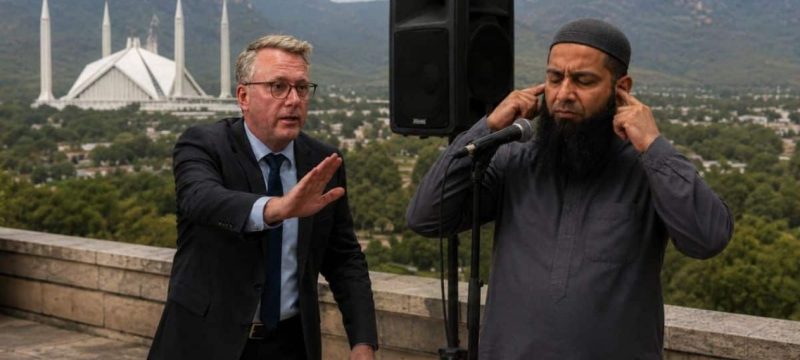
The government of Denmark is examining the possibility of restricting or banning the public broadcasting of the Islamic call to prayer, known as the Azan, from mosque loudspeakers.
The discussion began after Immigration and Integration Minister Morten Bødskov announced plans to investigate whether a nationwide restriction could be introduced under Danish law. He argued that amplified calls to prayer should not form part of the country’s public environment.
According to the minister, officials have been asked to review the legal options available to Denmark regarding the public broadcasting of the Azan. However, no legislation has been introduced, and no ban has been implemented at this stage.
The proposed measure would focus on calls to prayer broadcast through loudspeakers from mosques. It would not prevent Muslims from praying inside mosques or practising their religion. Religious activities within places of worship would continue as normal.
The latest review follows efforts launched by former immigration minister Rasmus Stoklund. In October 2025, he directed officials to resume an earlier examination of legal possibilities for limiting public calls to prayer.
A similar review had already begun in 2020. However, the process was not completed before the country’s 2022 parliamentary election. The issue gained public attention during the COVID-19 pandemic when a call to prayer was delivered near a church in Aarhus. Around the same period, Islamic organizations sought permission to broadcast the Azan publicly.
At that time, authorities noted that Denmark did not have specific legislation governing calls to prayer from mosques. This legal gap has become a central point in the current review.
Legal experts believe any nationwide restriction could raise questions about religious freedom and equal treatment. The Danish constitution protects the right to practice religion, provided it does not conflict with public order or morality.
As a result, the government must determine whether restricting the Azan would comply with constitutional protections and international legal standards. Officials will also need to assess whether such measures would treat all religious groups equally.
Supporters of the proposal argue that amplified religious calls do not belong in public spaces. Critics, however, believe a restriction targeting the Azan could be viewed as discriminatory and inconsistent with religious freedom principles.
The government has not announced a timeline for completing its legal review. It also remains unclear whether future regulations would apply specifically to the Azan or to amplified religious broadcasts more generally.
In other news read more about Iranian Singer Sentenced to 74 Lashes for Performing Without Hijab
For now, the proposal remains under consideration and would require further legal and political approval before any changes could take effect.