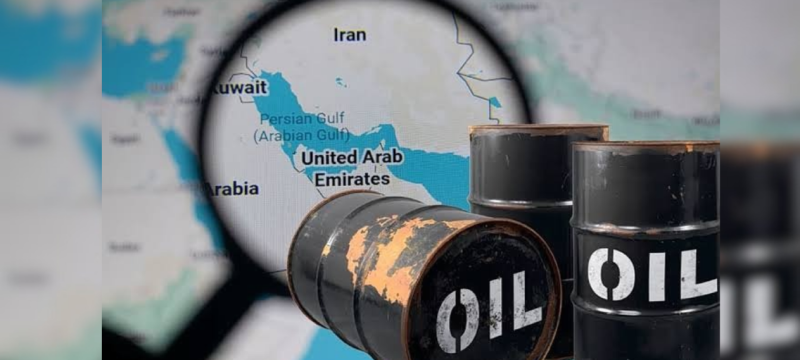
BEIJING: Oil rises in global markets as escalating Middle East tensions increase concerns about possible supply disruptions. Falling US crude oil inventories also supported prices on Wednesday.Brent crude futures climbed $1.61, or 1.5%, to $110.40 per barrel at 0630 GMT. Meanwhile, US West Texas Intermediate (WTI) crude gained $1.45, or 1.5%, to reach $99.27 per barrel.
Oil prices declined during the previous trading session. This followed discussions about possible mediation efforts involving Iran and Pakistan. However, Brent crude had reached a five-month high before retreating.Market analysts said prices have experienced significant fluctuations over recent sessions. Investors are weighing hopes for diplomatic progress against the possibility of prolonged regional tensions.
Suvro Sarkar, head of energy research at DBS, said profit-taking and hopes for a potential diplomatic agreement had influenced recent market movements. He also highlighted continued declines in US crude oil and petroleum product inventories.
Middle East Tensions Increase Supply Risks
Concerns about regional security remain a major factor influencing oil prices. Iranian media outlet Nournews reported on Tuesday that Tehran would not negotiate with Washington until its demands were met.The report also stated that a Qatari delegation had arrived in Tehran. However, officials had not officially confirmed these developments.
Maritime security concerns have also intensified across the region. Ship-tracking company Kpler reported at least 18 vessel attacks during the previous two weeks.Analysts at LSEG warned that Iran was targeting tankers beyond the Strait of Hormuz. The reported risks extended into the Gulf of Oman, threatening regional crude oil shipments.
These developments could disrupt oil loading operations and ship-to-ship transfers supporting regional exports. Any prolonged disruption could place additional pressure on global energy supplies.
Saudi Arabia Faces Reported Attacks
Regional tensions have also affected Saudi Arabia. The Houthis claimed responsibility on Monday for attacks involving a Saudi Aramco facility in Yanbu and the Shaybah oilfield.The group also claimed attacks on Riyadh and Abha airports. Separately, fighting in Yemen intensified after a Houthi attack on government forces.
The death toll from that attack rose to 73, according to the report.Iranian Foreign Minister Abbas Araqchi said on Tuesday that Iran had not received responses from Saudi Arabia or Yemen’s Houthis. He was referring to Iran’s offer to help arrange peace talks.The lack of confirmed diplomatic progress has added uncertainty to the regional outlook. Traders continue to monitor developments for signs of further disruptions.
Falling US Inventories Support Oil Prices
Oil rises also received support from declining US crude inventories. Market sources citing American Petroleum Institute (API) data reported that US crude stocks fell by 4.9 million barrels.The decline covered the week ending October 16. Lower inventories can support oil prices by indicating reduced supplies available in storage.
Meanwhile, two US Energy Department officials said Washington was working with refiners worldwide to increase fuel production. Their efforts aim to address a diesel shortage that has pushed prices higher.US stock markets also finished mostly higher on Tuesday. The Dow Jones Industrial Average gained approximately 1%, reflecting a broadly positive session for major shares.
Investors will continue watching diplomatic developments, inventory figures, and fuel production trends. These factors could influence oil prices in the coming sessions.
In other news read more about Iran Faces Highest Inflation in 83 Years as Prices Keep Rising
For now, concerns about Middle East supply disruptions and declining US inventories remain important drivers of the global oil market.