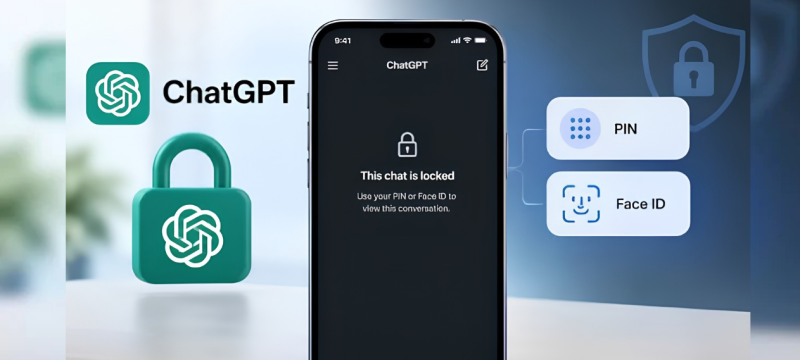
OpenAI has reportedly introduced a new privacy feature called Locked Chats for ChatGPT users. The feature allows users to protect selected conversations with an additional security layer.
Users can secure private chats using a four-digit PIN. Once locked, conversations disappear from regular chat history, pinned chats, and search results. Instead, users can access them through a separate Locked Chats section.
The feature is designed to protect conversations from people who might access a user’s device. It also offers biometric authentication on supported iOS and Android devices. Users can use Face ID or other available biometric methods instead of entering their PIN repeatedly.
How the ChatGPT Locked Chats Feature Works
The new option gives users greater control over the visibility of their conversations. Users can lock specific chats rather than hiding their entire conversation history.
After a conversation is locked, it will no longer appear in the usual history or search results. This can help users keep personal discussions separate from their everyday chats.
The update comes as ChatGPT continues to introduce more advanced tools and interactive features. As people use AI assistants for personal and professional tasks, protecting sensitive conversations has become increasingly important.
However, the feature has specific limitations. It provides an additional layer of protection against people accessing a device, but it does not guarantee complete privacy.
Locked Chats Do Not Offer End-to-End Encryption
The Locked Chats feature does not provide end-to-end encryption. Conversations remain stored on OpenAI’s servers and are subject to the company’s applicable data policies.
This means the lock primarily protects conversations from other people using the same device. It does not prevent the service provider from processing data under its applicable policies.
Users should therefore avoid treating the feature as a complete privacy solution. They should review the platform’s privacy settings before sharing confidential or sensitive information.
The update also comes amid growing attention to AI privacy and data protection. The European Union’s AI Act entered a new phase of enforcement in August 2026, according to the provided report.
Forgetting the PIN Could Delete Locked Conversations
Users should remember their PIN before locking important conversations. Resetting a forgotten PIN reportedly deletes all locked chats and the files uploaded within them.
According to the provided information, OpenAI support cannot recover these deleted conversations. Users should consider this limitation before moving important discussions into the locked section.
Biometric authentication on supported devices may help users access their conversations without repeatedly entering a PIN. However, users should still understand the risks associated with resetting their security credentials.
Feature Availability and Mobile Support
The feature is reportedly rolling out gradually to eligible ChatGPT users. Availability is expected across Free, Go, Plus, and Pro subscriptions.
On mobile devices, locked conversations also support voice mode. This could benefit users who rely on voice interactions while travelling or working away from their desks.
The feature may also interest professionals who use AI tools for research and other specialised tasks. However, locking a conversation does not replace workplace security policies or appropriate data protection measures.
Locked Chats are not currently available for conversations in Codex, according to the provided information.
In other news read more about ChatGPT Surprises Ducky Bhai By Guessing Secret Mystery Gift
Overall, the new ChatGPT feature offers users another way to manage the visibility of private conversations. However, users should understand its limitations and avoid sharing sensitive information without considering the platform’s data policies.