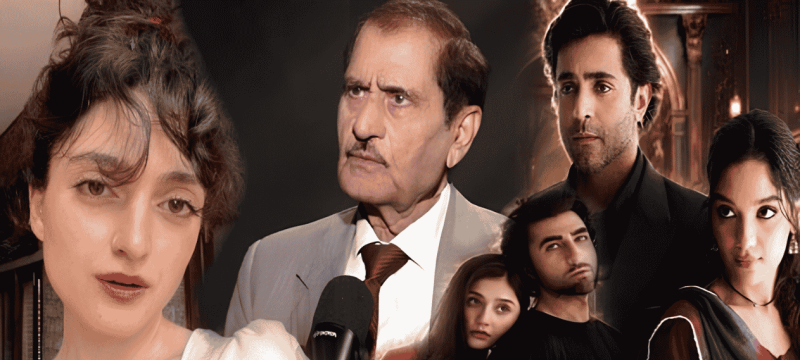
Pakistani drama Dar-e-Nijaat has sparked debate over relationships, gender expectations and family pressure.
Writer Nasir Adeeb and digital creator Mahnoor Rahim have questioned several parts of the storyline. They have focused on the drama’s portrayal of relationships and sacrifices made by its characters.
Written by Umera Ahmed, the drama is directed by Saqib Khan. It is produced under Three Entertainment and features Sheheryar Munawar, Dur-e-Fishan Saleem and Nameer Nawaz Khan.
The story has gained strong attention from viewers. Zaryab, Zamil and Abu Bakar remain central to the ongoing discussion.
However, some viewers have raised concerns about the messages presented through their relationships.
Nasir Adeeb Questions Gender Double Standards
Writer Nasir Adeeb recently shared his analysis of Dar-e-Nijaat. He focused on what he considers a major gender double standard in society.
Adeeb argued that society often judges men and women differently for their past mistakes. He said men may have complicated personal histories but still be considered suitable marriage partners.
Women, however, can face lasting judgment over similar experiences. According to Adeeb, this reflects hypocrisy within a male-dominated social structure.
He said some men expect a “pious” wife despite having troubled personal histories. Adeeb also discussed the drama’s main characters and their individual mistakes.
He said Zaryab, Zamil, Hamna and Abu Bakar represent different social attitudes. He believes viewers can recognize familiar behaviors through these characters.
Adeeb also compared Zamil and Zaryab’s situations. He noted that Zamil admits his mistakes and believes he has changed.
Zaryab, meanwhile, continues to face judgment within the story. Adeeb said this difference raises questions about society’s willingness to forgive men.
He also highlighted the consequences women can face after difficult relationships. Adeeb urged young women to remain careful about situations that could affect their futures.
He warned that certain choices could lead to unhappy marriages or emotional suffering.
Mahnoor Rahim Questions Abu Bakar’s Sacrifice
Digital creator Mahnoor Rahim has also criticized parts of Dar-e-Nijaat. She questioned the circumstances surrounding Zaryab’s marriage to Abu Bakar.
In the storyline, Zaryab marries Abu Bakar to prove a point to Zamil. Abu Bakar agrees because his mother believes Zaryab’s family once helped them.
She considers the marriage a way of repaying that favour. Mahnoor questioned why Abu Bakar should sacrifice his future for his mother’s sense of obligation.
She argued that there could be other ways to repay a family’s kindness. She also questioned the storyline involving Zaryab, Zamil and Hamna.
Zaryab tells Zamil to divorce Hamna and marry her instead. Mahnoor questioned what fault Hamna has in this situation.
She also criticized the idea of presenting such behavior as acceptable. According to Mahnoor, the issue becomes more concerning when viewers praise Abu Bakar’s sacrifice.
She questioned whether such sacrifices should be presented as noble or romantic. She argued that repeated portrayals could send confusing messages about relationships.
Her comments also received support from some social media users. Several viewers questioned the drama’s treatment of emotional pressure and family expectations.
Others discussed the portrayal of an extremely obedient or “farmanbardar” son. They questioned whether such sacrifices should be celebrated without considering their consequences.
Drama Sparks Wider Discussion
Dar-e-Nijaat continues to attract attention for its performances and intense storyline. However, the criticism has shifted attention toward its social themes.
Nasir Adeeb and Mahnoor Rahim have raised different concerns about the drama. Their comments have focused on gender expectations, family pressure and emotional manipulation.
The discussion also highlights questions about personal choices and relationship boundaries. As the drama progresses, viewers continue to debate the decisions made by its characters.
The ongoing discussion shows how strongly the storyline has connected with its audience. It has also encouraged wider conversations about relationships and social expectations.
In other news read more about: Netizens Praise Maa Jee’s Emotional Dialogue in Dar-e-Nijaat