What Is Pessimism?
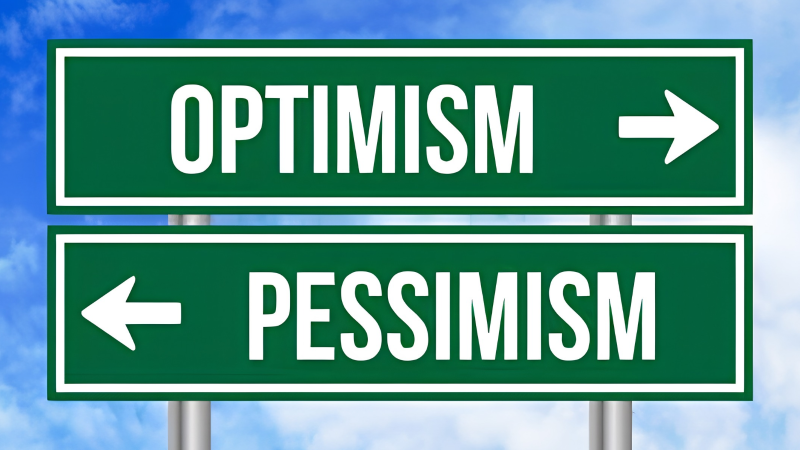
Pessimism is defined as an inclination to focus on the negative aspects of every situation and to expect the worst outcome in every situation. It is also the doctrine that reality is essentially evil. Pessimistic people often think that their negative attitude is realistic and that optimism is entirely delusional. For pessimistic people, a negative outcome is standard and everyday, while any positive outcome is a once-in-a-lifetime miracle and an exception to the melancholy of daily life.
Is Pessimism Realistic in a Developing Country Like Pakistan?
In a country where even the lowest tier of Maslow’s hierarchy of needs—food, water and shelter—is a luxury, pessimism as a mindset is a reality. In a developing country, it might even be understandable to call pessimism realistic. Although many people apply the religious approach of gratitude to God in their daily lives, it could be argued that this gratitude comes from the mindset of “It could be a lot worse; there are people in worse situations than me.” So, does our gratitude to God also come from an inclination to see other negative situations?
In a country where basic human rights have to be earned, deserved, allowed or gifted by other people, where these rights are luxuries that vary socioeconomically from household to household, family to family and area to area, it could also be argued that pessimism is a mindset a person needs in order to survive, and that optimism is a luxury that comes with risks.
How Does Naseeb Fuel Resignation and Powerlessness?
But how much does this justifiable pessimism hold us back? An example of optimism as an optional luxury, again linked to the pessimism-fueled gratitude to God, is leaving a woman’s happiness and good treatment after marriage to a pre-written Naseeb from God. In Pakistan, your socio-economic status and your general wellbeing are prewritten and inherited through the fate that God has decided for you. Your happiness and burdens are prewritten and gift-wrapped entirely for you. In this way, a person is an audience in their own life, watching it unfold with a resigned acceptance that problems are a reality and that optimism is just a response to the less bleak aspects of that reality. Negativity, gratitude and optimism in Pakistan are all acceptances of that reality, and in many ways are totally fueled by pessimism. It is a total resignation of self and a watching of life unfold with a sense of powerlessness, whether a perceived powerlessness or an actual lack of ownership over your own life.
When Is Powerlessness Real for Women in Pakistan?
However, in Pakistan, powerlessness can be a reality rather than a perceived drawback existing only in your mind. A woman whose marriage, education and career are controlled by the men in her life, who comes from a hyperconservative family structure where she can be harmed by the men in her life, is essentially powerless, and the aforementioned realistic pessimism and pessimistic gratitude are requirements for her survival.
Is Naseeb Just an Inherited Cultural Mindset?
But for middle-class and upper-middle-class women, this resignation of happiness to Naseeb is simply an inherited cultural mindset and only a perceived powerlessness. It could be that a few generations back, their elders had actual powerlessness over their marriage and education, and had to resort to resignation to survive or to make the marriage functional. In this way, Naseeb becomes culture and not reality, so that women do not realize the authority and ownership they have over their own lives and thus make their family life functional. This mindset becomes an ankle weight that continues the cycle of mediocrity and functionality rather than thriving. That is why even basic things like a healthy relationship are a luxurious Naseeb bestowed on few people.
As the saying goes, “Naseeb naseeb ki baat hoti hai.”
In situations where a person is educated and has a supportive family, this pessimism is only a learned cultural phenomenon, adopted over years of poverty that their ancestors faced, weighing them down and stopping them from taking ownership and authority over their circumstances with the optimism that goodness is achievable.
However, in Pakistan, few people have the luxury of education and family support, which is why pessimism is an essential cultural practice optimised for our countrymen’s survival