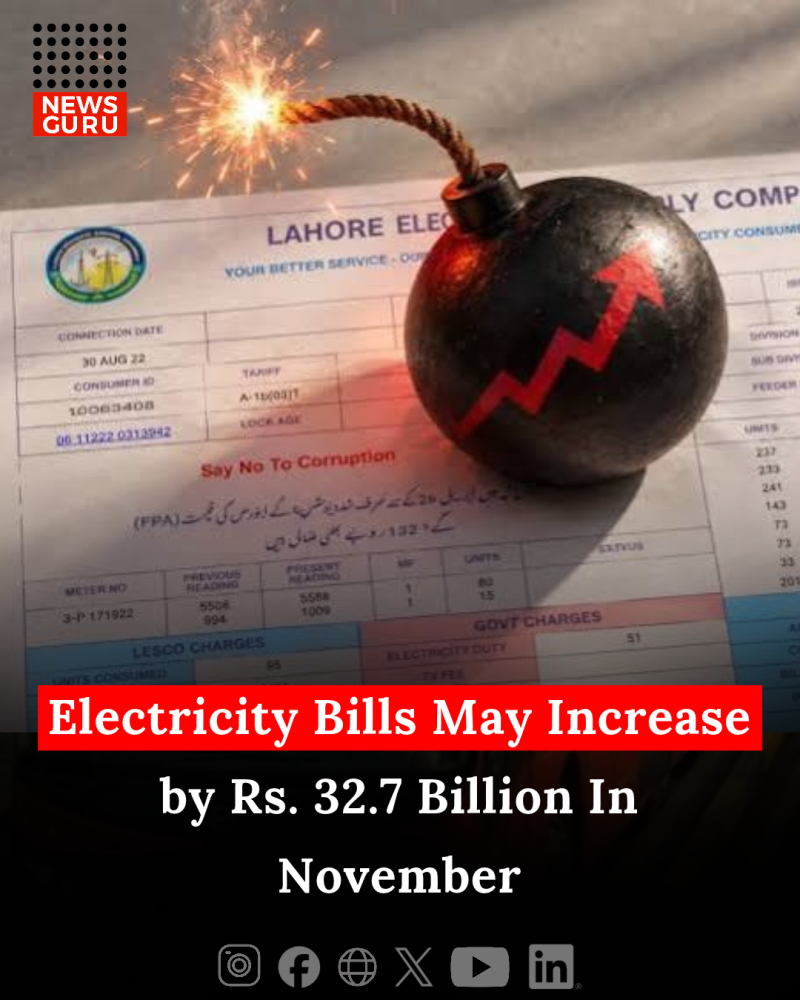
Electricity consumers across Pakistan may face higher bills in November due to a proposed fuel price adjustment. The Power Division has projected an additional financial burden of Rs. 32.7 billion.
The proposed fuel cost adjustment (FCA) stands at Rs. 2.56 per unit for electricity consumed in September 2026. However, the final amount will depend on the relevant regulatory authority’s decision.
The projected adjustment is significantly higher than the previous month’s rate. Consumers paid an FCA of Rs. 1.11 per unit for electricity consumed in August. The latest projection represents an increase of Rs. 1.45 per unit.
Electricity Fuel Adjustment Expected to Increase
According to the Power Division, rising fuel costs have increased pressure on electricity prices. The proposed adjustment aims to account for changes in fuel expenses during September.
The division stated that targeted load management helped control the expected increase. Without these measures, the fuel price adjustment could have reached Rs. 3.44 per unit.
Officials said electricity supply restrictions helped reduce dependence on expensive fuels. These included furnace oil and high-speed diesel, which increase power generation costs.
The government reportedly restricted electricity supply for approximately two to two-and-a-half hours daily. This measure reduced the need to generate power using more expensive fuel sources.
RLNG Supplies Help Reduce Electricity Costs
The Power Division also highlighted the impact of imported re-gasified liquefied natural gas (RLNG) supplies. Supplying imported RLNG to power plants at domestic gas prices helped reduce the projected adjustment.
According to the division, this arrangement lowered the estimated fuel adjustment by 83 paisa per unit. The measure helped limit the potential increase in electricity bills.
However, international fuel prices and LNG supply constraints continue to create challenges. The division linked these pressures to regional tensions and disruptions in global supply chains.
It also referred to disruptions following the closure of the Strait of Hormuz. These developments pushed Brent crude oil prices above $120 per barrel, according to the statement.
This price is significantly higher than the approximately $70 per barrel benchmark used when calculating the base electricity tariff.
Pakistan Continues Efforts to Secure RLNG Supplies
The Power Division said Pakistan continued working to secure adequate RLNG supplies despite international challenges. Qatar had declared force majeure, adding further pressure to the country’s gas supply arrangements.
Despite these difficulties, Pakistan continued using available contracted supplies. The country also pursued additional spot cargoes whenever necessary.
These efforts aimed to maintain fuel availability for power generation and limit further cost increases.
If approved, the proposed FCA could affect electricity consumers through their November bills. However, the final adjustment will depend on the applicable regulatory determination.
In other news read more about Saudi Arabia Intercepts Cruise Missile Near Madinah Amid Air Defense Alert
Consumers will have to wait for the official decision to learn the confirmed per-unit adjustment. The approved rate will determine the actual impact on their electricity bills.