


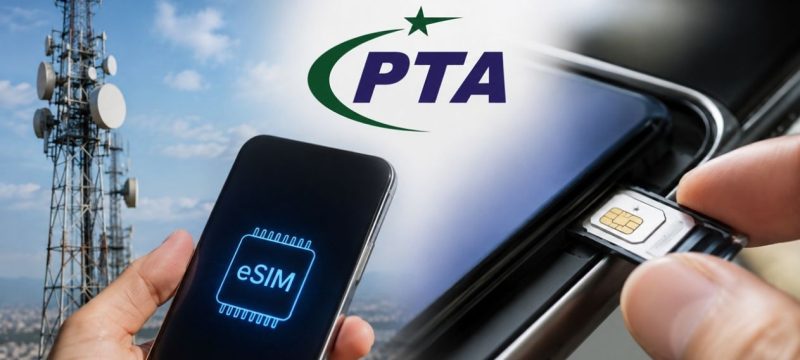
ISLAMABAD: Pakistan’s shift toward eSIM technology is expected to accelerate following a revised policy by the Pakistan Telecommunication Authority (PTA).
The new eSIM policy will take effect from August 17, 2026. It introduces lower activation costs and free device transfers for subscribers.
Under the revised framework, the maximum initial eSIM issuance fee has been set at Rs1,500. Users will also be allowed to transfer their eSIM to another compatible device.
Subscribers can transfer their eSIM up to 10 times without paying an additional fee. The move is expected to benefit users who frequently upgrade their smartphones.
Previously, users faced uncertainty over the cost of moving an eSIM between devices. The revised rules aim to make the process clearer and more affordable.
The policy follows recommendations from a parliamentary committee. The committee had urged the telecom regulator to simplify eSIM services and reduce costs for consumers.
An eSIM is a digital version of a traditional SIM card. It is built directly into compatible smartphones, tablets and other smart devices.
Unlike a physical SIM, an eSIM does not require a plastic card. Users can activate their mobile connection through a QR code or an operator’s activation process.
PTA said users could already reuse the original QR code in many cases. However, the telecom industry did not have a standardized fee structure.
The revised eSIM policy addresses this issue by establishing a nationwide charging framework. PTA developed the framework after consultations with cellular operators.
The changes are expected to make eSIM transfers simpler and more transparent. They could particularly help consumers who frequently change smartphones.
The regulator is also introducing stronger security measures for SIM ownership. PTA is working with the National Database and Registration Authority (NADRA).
Cellular mobile operators are also involved in developing the new verification system. The planned mechanism will introduce additional identity checks.
These checks will apply during SIM issuance and ownership verification. The measures aim to reduce fraudulent registrations and identity misuse.
The system is also expected to help prevent unauthorized SIM activation. This could strengthen overall security for mobile subscribers.
The revised policy may encourage wider eSIM adoption across Pakistan. Many flagship and mid-range smartphones now support embedded SIM technology.
Lower activation charges could make the technology more attractive to consumers. Free device transfers may also remove a key concern for smartphone users.
International visitors and travelers can also use travel eSIM services in Pakistan. These packages are generally data-only and can be activated through QR codes.
Such travel packages can operate through local partner networks. These include Jazz, Zong, Telenor and Ufone.
Travel eSIM packages are available at different prices and data allowances. Some providers also support hotspot sharing for additional devices.
The latest policy could therefore make digital connectivity more convenient. It may also support the gradual shift away from traditional physical SIM cards.
In other news read more about iPhone Users May Soon Copy and Paste Directly to Windows PCs
For users with compatible smartphones, the revised eSIM rules are expected to simplify mobile connection management. The changes will officially come into effect on August 17.