


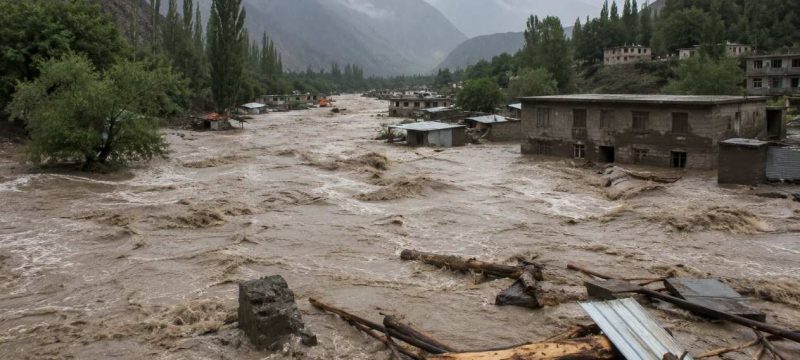
Northern Pakistan has been placed on high alert after authorities warned of an increasing Flood threat linked to Glacial Lake Outburst Floods (GLOFs). The Pakistan Meteorological Department (PMD) said an ongoing heatwave is rapidly melting glaciers and snowfields across Gilgit-Baltistan and Khyber Pakhtunkhwa, raising the risk of dangerous flooding.
According to the PMD, the intense heat is expected to continue until at least the first week of July. Rising temperatures are accelerating glacier melt, causing rivers and streams to swell as more water flows downstream.
Officials warned that existing glacial lakes may expand quickly due to the continuous influx of meltwater. They also cautioned that new glacial lakes could form in vulnerable mountain regions if the heatwave persists.
The department said natural ice and moraine dams that hold back these lakes are becoming increasingly unstable. If these barriers collapse, they could trigger a sudden Flood event, sending massive volumes of water toward downstream communities with little warning.
Authorities believe low-lying settlements located near rivers and streams face the greatest danger. Flash floods, landslides, mudslides, debris flows, and rockfalls also remain major concerns in mountainous areas.
The PMD has advised residents and tourists to stay away from rivers, seasonal streams, glacial lakes, and narrow mountain valleys. Camping, trekking, and recreational activities in high-risk areas have also been strongly discouraged until weather conditions improve.
The latest advisory follows an earlier warning issued this month regarding the growing GLOF threat. Officials say the prolonged heatwave has further increased the possibility of sudden Flood incidents across northern Pakistan.
Earlier, the Pakistan Space and Upper Atmosphere Research Commission (SUPARCO) identified around 130 glacial lakes that could pose a serious threat if they burst. Among them, 24 lakes remain unfrozen and are being monitored continuously through satellite technology.
Experts are tracking changes in water levels and assessing downstream populations that could be affected if an outburst occurs. The monitoring program is one of Pakistan’s largest glacier risk assessment efforts to date.
The PMD has identified several districts that remain particularly vulnerable, including Hunza, Nagar, Ghizer, Skardu, Ghanche, Astore, Diamer, Chitral, Swat, Upper and Lower Kohistan, Upper and Lower Dir, and Mansehra.
Meanwhile, the Khyber Pakhtunkhwa Health Department has directed all hospitals across the province to establish dedicated emergency units for patients suffering from heatstroke and other heat-related illnesses.
Authorities say the danger extends beyond glacial lake bursts. Roads, bridges, power infrastructure, and isolated mountain communities could also be affected by landslides, debris flows, and other weather-related hazards. Important transport routes, including sections of the Karakoram Highway and roads leading to Hunza and Skardu, remain vulnerable during periods of extreme weather.
In other news read more about: Deadly Cloudburst Unleashes Devastating Floods Across Chilas
Officials have urged the public to remain alert, follow weather advisories, and avoid unnecessary travel to high-risk mountain areas until the threat subsides.