The World Economic Forum’s Global Gender Gap Report 2026, released September 16, ranks Pakistan 143rd out of 145 countries — third from the bottom, ahead of only Algeria, the Democratic Republic of the Congo, Iran, and Chad. The index tracks gender equality across four sub-indexes:
- Economic Participation and Opportunity
- Educational Attainment
- Health and Survival
- Political Empowerment
Pakistan closed 59.5% of its overall gender gap this year, up from 56.7% in 2025 — its strongest year-on-year improvement in a decade, driven almost entirely by gains in education. That framing matters, because the sub-index breakdown tells a much more uneven story than “Pakistan is improving” suggests.
Educational Attainment: A Ranking That Hides More Than It Shows
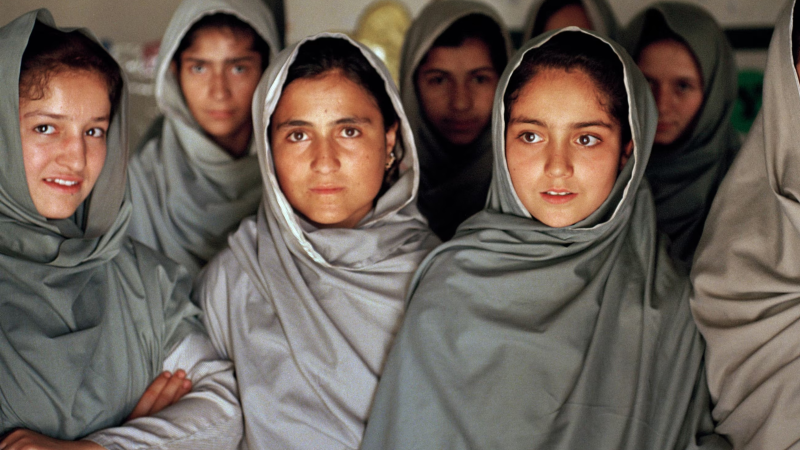
This sub-index tracks the gap in access to basic and higher education — not the overall quality of the school system, just whether girls get the same schooling opportunities as boys. Pakistan ranks 130th globally here, with a 91.7% equality score, up more than six points from the previous edition and 21 points since the index began in 2006. The WEF credited this as the single biggest driver of Pakistan’s overall improvement this year.
Pakistan also achieved complete gender parity in university education, ranking 1st globally on female tertiary enrolment. But that headline number flattens a much smaller reality: only about 10.71% of eligible women actually receive higher education, compared to roughly 11% of men. Because the two numbers are nearly equal, the index records “full parity” — even though the total share of the population reaching university, for either gender, remains low. The index also doesn’t capture the local data showing major gender gaps that persist in primary and secondary education.
Political Empowerment: Quotas, Not Power
Pakistan ranks 107th out of 145 in Political Empowerment, with a score of 14.1%. The rank is propped up almost entirely by two things: a legal quota system, and one historical data point.
- 60 of 336 seats in the National Assembly are reserved for women — but these seats aren’t directly voted for
- 17 of 96 seats in the Senate are reserved for women
- 168 seats across all Provincial Assemblies are reserved for women
These mechanisms put women at roughly 21.7% of the National Assembly, but civil society groups like the Free and Fair Election Network (FAFEN) point out that the quota functions as a ceiling rather than a floor. Because political parties rarely exceed the minimum 5% candidate rule for women, most female representation stays dependent on the indirect quota — leaving women without independent constituencies or real decision-making power inside their own parties.
The rank is also boosted by a single historical fact: the index gives countries credit for having had a female head of state within the last 50 years, and for Pakistan, that refers entirely to Benazir Bhutto, who served two non-consecutive terms as Prime Minister (1988–1990 and 1993–1996). That one data point pulls Pakistan’s “years with a female head of state” ranking up to 39th in the world — skewing the entire Political Empowerment sub-index toward a false impression of progress. The reality today: women hold a mere 3.45% of actual ministerial and executive positions in Pakistan.
Health and Survival: Born Equal, Dying Unequal
Pakistan ranks 127th out of 145 in this category, with a mixed result. The natural human sex ratio at birth is roughly 105 boys for every 100 girls. Pakistan’s birth statistics align almost exactly with this biological norm — unlike countries such as China, India, or Azerbaijan, where cultural preference for sons has historically produced artificial imbalances through sex-selective practices. Because Pakistan shows no such statistical skew, the index records a closed gap and a #1 global ranking on sex ratio at birth.
But healthy life expectancy tells the opposite story: 57.1 years for men versus 56.69 years for women. Biologically, women are genetically predisposed to live 2 to 5 years longer than men, assuming equal access to food, healthcare, and safety. In Pakistan, women are actually living shorter healthy lives than men. Girls are born at healthy, equal rates — but as they grow up, systemic issues like high maternal mortality, malnutrition, and unequal access to healthcare strip away that natural biological advantage. A perfect biological start turns into a worse health outcome by the time women reach old age.
Economic Participation and Opportunity: Where the Progress Disappears
This is Pakistan’s weakest category by far — 144th out of 145, second to last globally, with a score of just 36.4%.
- Only 28.21% of women participate in the labor force, compared to 81.46% of men
- Men hold 93.87% of senior official, managerial, and legislator roles — leaving women just 6.13% of decision-making positions
- Pakistan’s estimated earned-income parity score sits at just 26.3%, and has actually declined by 7.7 percentage points since 2006
Women have achieved full parity in higher education, but face a massive structural roadblock the moment they try to enter the professional world. The women who do work tend to sit at opposite ends of the spectrum — highly educated urban professionals, or low-income rural laborers — while the vast majority of middle-class women drop out of the economy entirely after marriage, due to social pressure, unsafe commutes, or a lack of childcare. Working women who remain are heavily concentrated in traditionally lower-paying “pink-collar” sectors like teaching and nursing, rather than leadership roles.
This economic exclusion effectively cancels out Pakistan’s progress in education. The country is spending resources to graduate women from universities at full parity, only for the economy to fail to use that talent at all. This gap — not education, not politics, not health — is the primary reason Pakistan remains stuck at 143rd in the world overall.
The Bottom Line
Pakistan’s improvement in this year’s World Economic Forum Gender Equality Report 2026 is real, but narrow. Education numbers look strong largely because so few people of either gender reach university in the first place. Political numbers look better than they are because of a 30-year-old quota and a Prime Minister who left office in 1996. Health numbers hide a system that lets girls survive childbirth only to shorten their lives afterward. And economic participation — the category that would actually translate all of this into independence — remains Pakistan’s single worst-performing area in the entire index.
Sources: World Economic Forum, Global Gender Gap Report 2026, The Express Tribune, The Express Tribune (Educational Attainment), Shafaqna Pakistan, Voice of Vienna