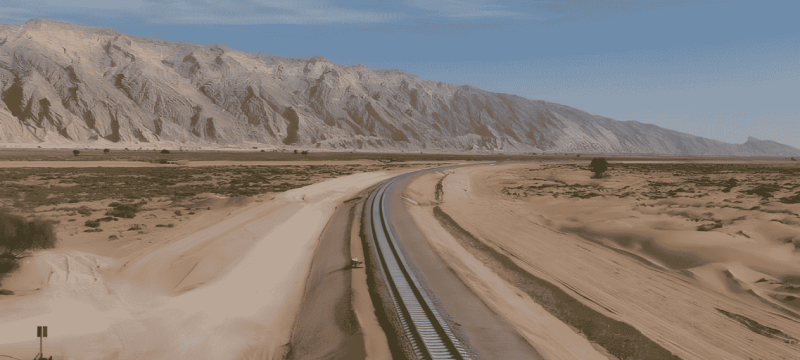
Oman has formally approved a major railway agreement with the United Arab Emirates. Sultan Haitham bin Tarik issued Royal Decree No. 75/2026 on September 3, 2026.
The decree approves the bilateral rail agreement signed by Oman and the UAE on June 21, 2026. The railway agreement marks an important step toward stronger transport links between the two Gulf countries.
The project is being developed by Hafeet Rail, formerly known as Oman-Etihad Rail Company. Hafeet Rail is a joint venture involving Etihad Rail, Oman Rail, and Mubadala Investment Company.
The cross-border project has an estimated value of nearly $2.5 billion. It has secured around $1.5 billion in project financing.
Railway Project to Connect Oman and UAE
The planned railway line will stretch approximately 238 kilometers. It will connect Sohar Port in Oman with Al Buraimi and Al Ain in the UAE.
The line will eventually connect with the UAE’s wider railway network.The project will support both passenger services and heavy freight transportation.
Passenger trains are expected to travel at speeds of up to 200 kilometers per hour. Each passenger train will have capacity for around 400 people.
The railway could significantly reduce travel times between major locations. Travel between Abu Dhabi and Sohar is expected to take around 100 minutes.
The journey between Al Ain and Sohar could take approximately 47 minutes. These faster connections could encourage greater movement between Oman and the UAE.
Freight Transport to Get Major Boost
The project will also strengthen freight transportation between the two countries. Freight trains are expected to operate at speeds of up to 120 kilometers per hour.
The rail corridor could reduce cargo transportation times by around 70 percent. Truck journeys between Sohar and Abu Dhabi currently take several hours.
The completed rail link could reduce the journey to around 100 minutes. The shorter transit time could improve supply chains and reduce logistics costs.
It may also strengthen the role of Sohar Port as a regional trade gateway.
Challenging Engineering Work Underway
The railway project involves complex construction across difficult terrain. The planned route crosses mountains, streams, wadis, and populated areas.
Engineers are also working on bridges and flood protection systems along the corridor. Around 2.5 kilometers of tunnels have already been constructed through rugged terrain.
These engineering works highlight the scale of the cross-border infrastructure project. The railway agreement also provides a framework for closer transport cooperation between Oman and the UAE.
Boost to Regional Rail Connectivity
The project is being viewed as an important step toward regional integration. It will create one of the Gulf’s first major cross-border railway connections.
The link could serve as a model for future rail projects between GCC countries. Improved rail connectivity could support regional trade and strengthen supply chains.
It could also make transportation across Gulf markets faster and more efficient. The project is expected to increase economic links between industrial centers and ports.
The railway agreement therefore has significance beyond transportation between Oman and the UAE. It could contribute to wider efforts to integrate railway networks across the Gulf.
The project also reflects growing investment in regional infrastructure and logistics. Once completed, the railway could play a key role in reshaping trade and passenger movement.
Oman and the UAE are expected to continue work toward completing the ambitious cross-border connection.
In other news read more about: Pakistan, Uzbekistan Reaffirm Commitment to Railway Project