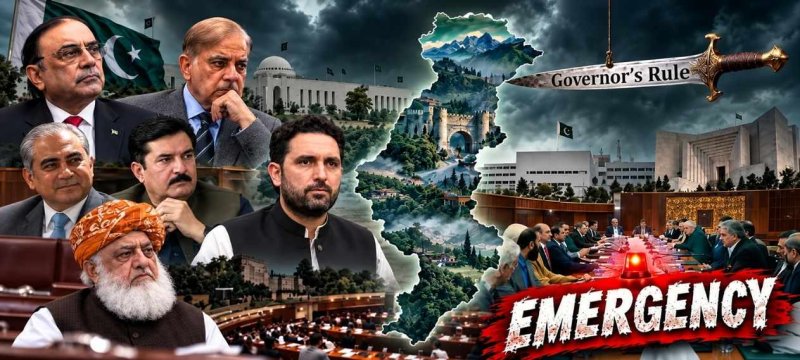
ISLAMABAD: The federal cabinet has recommended imposing an emergency in Khyber Pakhtunkhwa (KP) amid growing security concerns and rising terrorism threats.
The recommendation came during a cabinet meeting chaired by Prime Minister Shehbaz Sharif in Islamabad on Sunday.
According to an official statement, cabinet members reviewed the province’s worsening law and order situation. They also discussed concerns about the provincial government’s approach to counterterrorism operations.
The cabinet expressed concern over what it described as the KP administration’s lack of cooperation in combating terrorism.
Following the meeting, the cabinet recommended that President Asif Ali Zardari consider constitutional measures under Articles 232 and 234.
The Prime Minister’s Office confirmed that the recommendation had been forwarded to the Presidency for further consideration.
However, the recommendation does not mean that an emergency or Governor’s Rule has officially been imposed.
Federal Government Considers Governor’s Rule in KP
The federal government’s recommendation comes amid increasing tensions between Islamabad and the Pakistan Tehreek-e-Insaf (PTI)-led KP government.
Federal authorities have raised concerns about the provincial administration’s response to militancy and security challenges.
The cabinet believes stronger constitutional measures may be necessary to address the situation.
However, any decision to impose Governor’s Rule must follow the constitutional process. President Asif Ali Zardari will consider the advice forwarded by the prime minister.
The next steps will depend on the applicable constitutional requirements and any formal presidential proclamation.
What Do Articles 232 and 234 Say?
Article 232 of Pakistan’s Constitution provides a mechanism for declaring an emergency under specified circumstances.
These include war, external aggression, or internal disturbances beyond a provincial government’s ability to control. However, such declarations must meet constitutional conditions.
Article 234 addresses situations where a provincial government cannot function according to constitutional requirements.
Under this provision, the president may assume specified provincial executive functions, subject to constitutional safeguards.
Parliament may also exercise certain provincial legislative powers under the prescribed process. Importantly, the two constitutional provisions have different legal grounds and consequences.
An emergency declaration does not automatically dissolve the provincial government or assembly.
Political Tensions Between Centre and KP Government
Relations between the federal government and the KP administration have become increasingly strained over security policies.
The federal government has criticised the province’s counterterrorism approach and coordination with national security institutions.
Meanwhile, PTI representatives have argued that the provincial administration has been excluded from important security decisions.
These disagreements have intensified alongside political protests and ongoing discussions between the government and opposition.
The possibility of emergency measures has added another dimension to the political situation.
What Happens Next?
The federal cabinet’s recommendation is now awaiting further constitutional consideration.
The president must assess the advice and follow the requirements outlined in Pakistan’s Constitution. Separate sessions of the National Assembly and Senate are scheduled for October 13.
These parliamentary developments may provide further clarity regarding the federal government’s proposed measures.
For now, Governor’s Rule and emergency arrangements remain proposed constitutional options rather than confirmed measures.
Any formal decision will require the necessary constitutional steps and official notification.
In other news read more about: CM Sohail Afridi Rejects Governor’s Rule Threats as PTI March Heads to Swabi
The coming days will determine whether the federal government proceeds with emergency measures in Khyber Pakhtunkhwa