University leaders across Pakistan have signed a charter to make campuses free from tobacco, smoking, vaping, and recreational nicotine products.
The agreement was announced during the fifth monthly meeting of the Vice Chancellors and Rectors Forum. COMSATS University Islamabad (CUI) hosted the meeting at its Islamabad campus.
The forum brought together vice chancellors, rectors, and representatives from universities across Islamabad, Rawalpindi, Gilgit-Baltistan, and Azad Jammu and Kashmir. Participants discussed major challenges affecting Pakistan’s higher education sector.
Universities Commit to Nicotine-Free Campuses
Under the Charter for Tobacco and Nicotine-Free Campuses, participating universities aim to achieve completely tobacco-free and recreational nicotine-free environments.
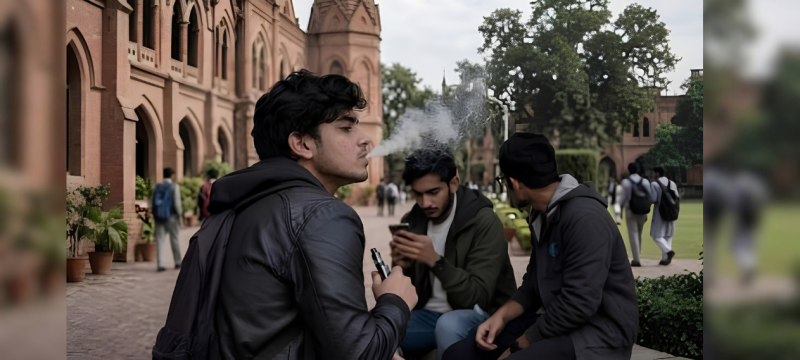
The initiative covers several products, including cigarettes, electronic cigarettes, vaping devices, heated tobacco products, and nicotine pouches.
Universities will gradually phase out these products from their campuses. They will also introduce awareness campaigns to educate students about tobacco and nicotine use.
The plan includes student-led activities, research initiatives, and monitoring systems. Participating institutions will also conduct annual assessments to measure their progress towards the charter’s objectives.
The initiative aims to encourage healthier campus environments. It also seeks to increase awareness about the use of tobacco and recreational nicotine products among university students.
University Leaders Seek Nationwide Policy Measures
The forum also agreed to send a joint letter to the Prime Minister. The signed charter will accompany the letter through the Chairman of the Higher Education Commission (HEC).
The university leaders are seeking nationwide policy measures to support tobacco and nicotine-free campuses. The proposal aims to strengthen efforts across higher education institutions in Pakistan.
Speaking at the meeting, COMSATS University Rector Prof. Dr. Raheel Qamar highlighted the responsibilities of university leaders. He stressed the need to address changing social and technological challenges.
He also discussed the growing influence of artificial intelligence and emerging technologies. These included quantum computing and their potential impact on scientific research and higher education.
Universities Discuss Education Sector Challenges
Participants also reviewed academic, regulatory, and financial issues affecting universities. Representatives from several public and private institutions attended the meeting.
These included Air University, Bahria University, FAST-National University, Fatima Jinnah Women University, Federal Urdu University, and Virtual University of Pakistan.
Other participants represented institutions such as NUTECH, PIEAS, HITEC University, National Skills University, and Health Services Academy. Representatives from several additional universities also joined the discussions.
The meeting concluded with an agreement to strengthen cooperation between higher education institutions. Participants also supported evidence-based policies and coordinated education reforms.
The tobacco-free campus initiative marks a joint effort by university leaders to address nicotine use. It includes measures targeting Vaping, smoking, and other recreational nicotine products.
In other news read more about Islamabad High Court Sets One-Month Deadline for Sheesha Cafe Rules
Universities will now work towards implementing the charter and assessing their progress. The proposed nationwide policy measures could further support these efforts across Pakistan.